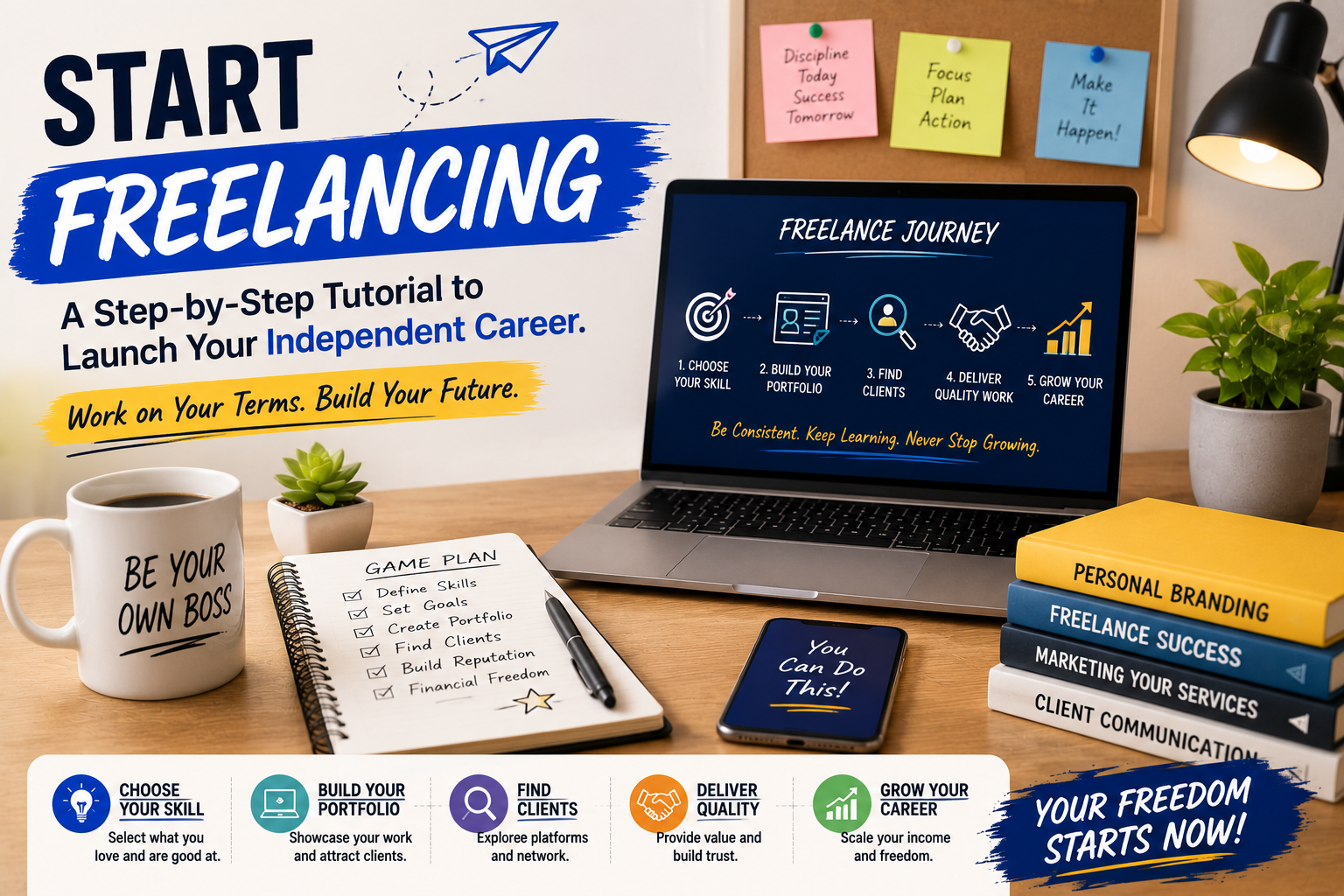
Start Freelancing: A Step-by-Step Tutorial to Launch Your Independent Career
Start freelancing: Your practical step-by-step tutorial
Want to start freelancing but not sure where to begin? This tutorial gives an actionable roadmap to launch and grow a freelance career. Whether you plan to freelance full time or start as a side hustle, these steps will help you pick the right skills, set rates, find clients, and build a reliable income.
Why start freelancing now
Freelancing offers flexibility, autonomy, and the potential for higher earnings when done right. Industry reports like Upwork’s Freelancing in America highlight how more people are choosing independent work for control over schedules and income. A strategic, repeatable approach helps you avoid common early mistakes and scale faster.
Step 1: Pick a marketable skill and niche
Start by listing marketable skills you already have or can learn quickly. Next, narrow to a niche where demand and specific outcomes are clear. Examples:
- Web development for small e-commerce shops
- Copywriting for SaaS landing pages
- Social media management for local restaurants
Specializing reduces competition and makes it easier to demonstrate value to potential clients.
Step 2: Build a lean portfolio and proof of work
Your portfolio is the primary trust signal. If you’re new, create a few high-quality samples that solve real problems. Options include:
- Spec projects tailored to your target niche
- Volunteer or discounted work for local businesses
- Case studies showing results, even if from past employment
Keep case studies focused on outcomes: what you did, the measurable result, and the tools used. A simple one-page portfolio site and a downloadable PDF can be enough to start.
Step 3: Choose rates and a pricing model
Decide whether to price hourly, per project, or on retainer. New freelancers often underprice; instead, calculate a target monthly income, estimate billable hours, and back into an hourly equivalent. Consider value-based pricing for outcome-driven work. Save a template for proposals and include clear scope, timelines, and payment terms.
Step 4: Find your first clients
Combine proactive outreach with presence on platforms. Effective channels include:
- Warm outreach to your network and past colleagues
- Platforms like Upwork or Fiverr for early traction (research platform fees first)
- LinkedIn posts and direct messages tailored to ideal clients
- Local business groups or industry forums
Personalized pitches that reference a prospect’s business and include a clear next step outperform generic outreach. Track outreach in a simple spreadsheet or CRM.
Step 5: Deliver great work and get referrals
First impressions matter. Communicate proactively, set realistic deadlines, and deliver measurable results. Ask satisfied clients for testimonials and referrals. Repeat business and referrals will become your most cost-effective client sources.
Step 6: Systems, contracts, and cash flow
Protect yourself with simple contracts that define scope, deliverables, payment schedule, and revision limits. Use invoices and bookkeeping tools to track income and taxes. A small retainer or milestone payments improve cash flow and reduce risk.
Step 7: Scale sustainably
When you have consistent clients, consider ways to scale: raise rates for new clients, offer packaged services, or subcontract. Invest profits into marketing, a better website, or tools that cut delivery time. Track metrics such as average project value, client acquisition cost, and utilization rate.
Tools and resources
- Portfolio builders and website templates for freelancers
- Invoicing and accounting software for small businesses
- Project management tools for client collaboration
FAQ
How much should I charge when I start freelancing?
Calculate a target monthly income, estimate realistic billable hours, and divide to get a baseline hourly rate. Research market rates in your niche and adjust for experience and outcomes. Consider introductory project rates rather than deep discounts.
Do I need a full website to start?
A basic one-page portfolio is often enough initially. Focus on quality case studies and clear calls to action. You can expand the site as you win clients. Create a downloadable PDF portfolio to send in pitches.
What if I can’t find clients on freelance platforms?
Platforms are just one channel. Ramp up personalized outreach, network on LinkedIn, join industry communities, or pitch local businesses. Thoughtful content and case studies can bring inbound leads over time.
Should I quit my job to freelance full time?
Not immediately. Build a client pipeline and a few months of living expenses first. A gradual transition reduces risk and gives you time to refine your service offering.
Further reading and authoritative context
For data on the growth of independent work, see reports such as Upwork’s Freelancing in America. To understand broader economic impacts and strategy, Harvard Business Review has articles on the gig economy and managing freelance relationships.
Conclusion
To start freelancing successfully, focus on a marketable skill, create a lean portfolio, set clear pricing, and prioritize client relationships. Use systems for contracts and cash flow, and reinvest in growth once you have steady clients. Use this tutorial as a checklist and adapt each step to your specialty. For practical next steps, create a one-page portfolio, draft a standard proposal template, and reach out to five potential clients this week. Good luck — the freelance journey is a series of small, repeatable wins.
Internal link opportunities: add links to a rates calculator, portfolio templates page, and proposal templates in your site resources.