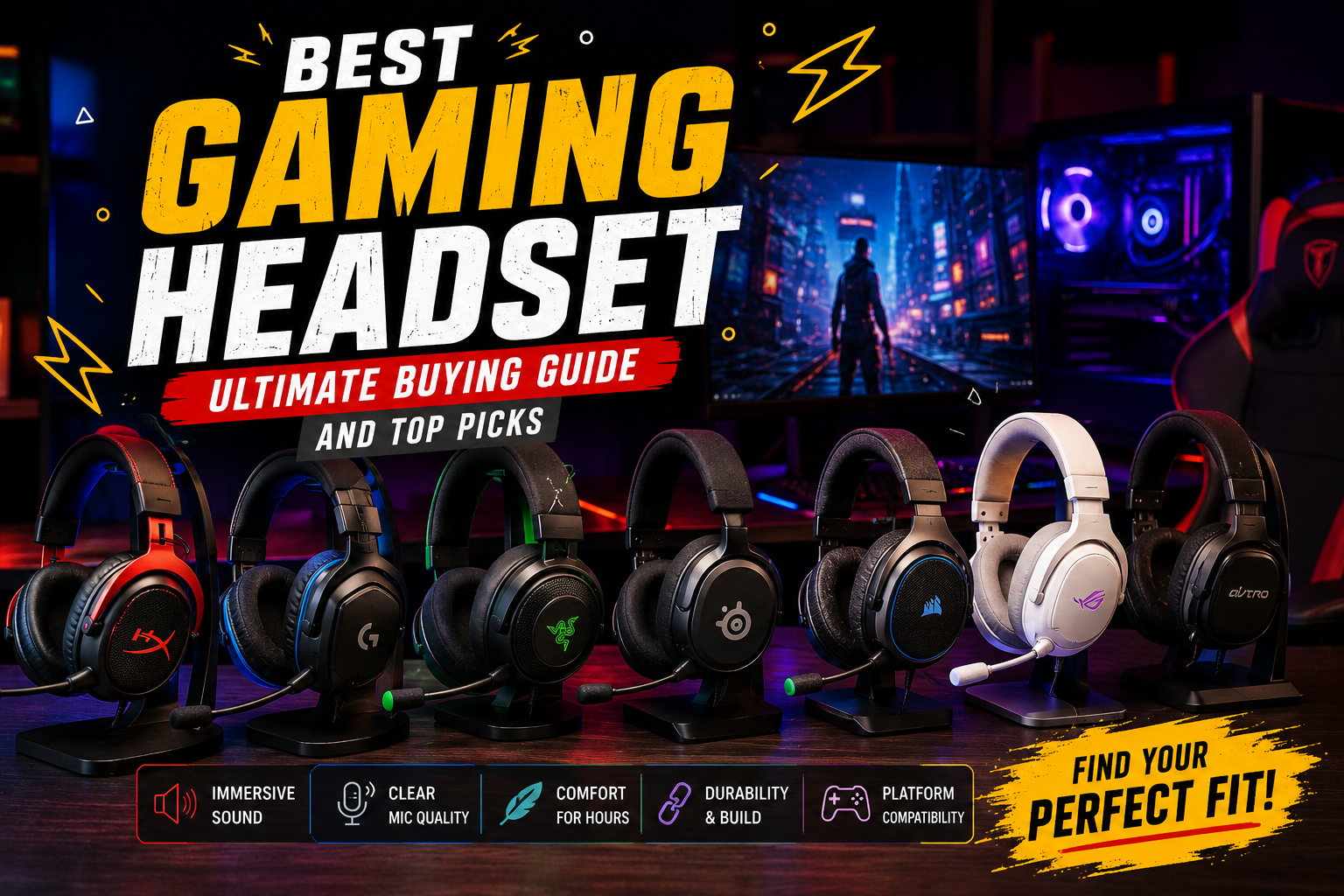
Best Gaming Headset: Ultimate Buying Guide and Top Picks
Find the best gaming headset for your setup, budget, and playstyle
Choosing the best gaming headset is about more than flashy RGB and brand names. Whether you’re chasing positional audio for competitive shooters, long-session comfort for MMOs, or a broadcast-quality mic for streaming, the right headset transforms how you experience games. This buying guide breaks down what matters most so you can pick the ideal headset for PC, PlayStation, Xbox, or Switch.
Why the best gaming headset matters
A dedicated gaming headset delivers clearer in-game directionality, reliable voice chat, and comfort through long sessions. Poor audio or a muddy mic can hurt performance and social gaming. Investing in the best gaming headset for your needs improves immersion, communication, and competitive edge.
Key features to evaluate when picking the best gaming headset
-
Sound profile and drivers
Look for headsets with clear mids for voice, tight bass for explosions, and accurate highs for footsteps. Larger drivers (40mm+) often provide fuller sound, but tuning matters more than size alone.
-
Surround sound and positional audio
Virtual surround features can help in competitive shooters; technologies like Dolby Atmos or proprietary spatial audio systems are useful. For technical evaluations, independent tests such as those on RTINGS provide measured performance data.
-
Microphone quality
For team play and streaming, mic clarity and noise rejection are crucial. Look for detachable or flip-to-mute mics and check real-world mic tests in reviews like CNET.
-
Comfort and build
Materials, clamping force, and padding determine comfort. Lightweight frames and breathable earcup materials reduce fatigue during marathon sessions.
-
Connectivity: wired vs wireless
Wired headsets provide low latency and plug-and-play simplicity. Wireless models add freedom—look for low-latency 2.4GHz dongles or high-quality Bluetooth with low-latency modes for consoles and mobile.
-
Compatibility and features
Check platform compatibility: USB-C introduces cross-platform convenience, while optical or 3.5mm jacks ensure broad console/PC support. Extra features like EQ software, on-ear controls, and swappable parts add value.
Top headset types and who they’re best for
-
Closed-back wired headsets
Best for competitive gamers who need low latency and focused sound. Often more affordable and reliable for tournaments.
-
Wireless gaming headsets
Ideal for couch play and streamers who want movement freedom. Choose models with solid battery life and a 2.4GHz dongle to avoid lag.
-
Open-back and audiophile-leaning headsets
Great for immersive single-player games with natural soundstage, but not ideal for noisy environments or competitive voice chat without a dedicated mic.
-
Hybrid headsets (USB + analog)
Offer the best cross-platform flexibility for users who switch between PC and console frequently.
How to pick the best gaming headset for your budget
Set priorities before shopping: is mic quality more important than surround sound? Do you need wireless convenience or minimal latency? Here’s a quick primer:
- Under $70: Good wired headsets with decent mics. Focus on comfort and driver tuning.
- $70–$150: Strong midrange options with better mics, wireless choices, and software EQ.
- $150+: Premium drivers, superior mics, comfort upgrades, and advanced spatial audio.
Practical buying tips
- Read measured reviews and mic samples from trusted sites like RTINGS and long-form reviews on CNET.
- Test comfort if possible—headset fit is personal. Look for generous return policies.
- Prefer wired for tournament play; wireless for couch and stream setups.
- Consider replaceable parts (ear pads, headbands) for longevity.
FAQ
What makes the best gaming headset for competitive FPS?
Low latency, accurate positional audio, punchy but controlled highs and mids, and a clear mic. Wired connections and lightweight designs are common choices.
Is wireless audio bad for gaming?
No—modern wireless headsets with 2.4GHz dongles have negligible latency. For strict competitive play, some pros still prefer wired connections for absolute consistency.
Do I need surround sound?
Virtual surround can help with spatial awareness in shooters, but good stereo imaging can be just as effective. Try headsets with customizable EQ and spatial audio demos before committing.
How important is mic quality?
Very—poor mic audio can ruin team communication and streams. Look for headsets with noise-rejecting mics or consider a standalone USB/XLR mic for streaming.
Conclusion
Finding the best gaming headset comes down to matching sound signature, mic performance, comfort, and connectivity to how you play. Use measured reviews and real-world mic tests, prioritize features that matter most to you, and remember that a well-chosen headset can be the difference between hearing an opponent and being surprised by one. For more gear guidance, check our other buying guides on gaming mice, monitors, and chairs to build a balanced setup.
Natural internal link opportunities: see our guides on gaming mice, gaming monitors, and streaming gear for complementary upgrades.