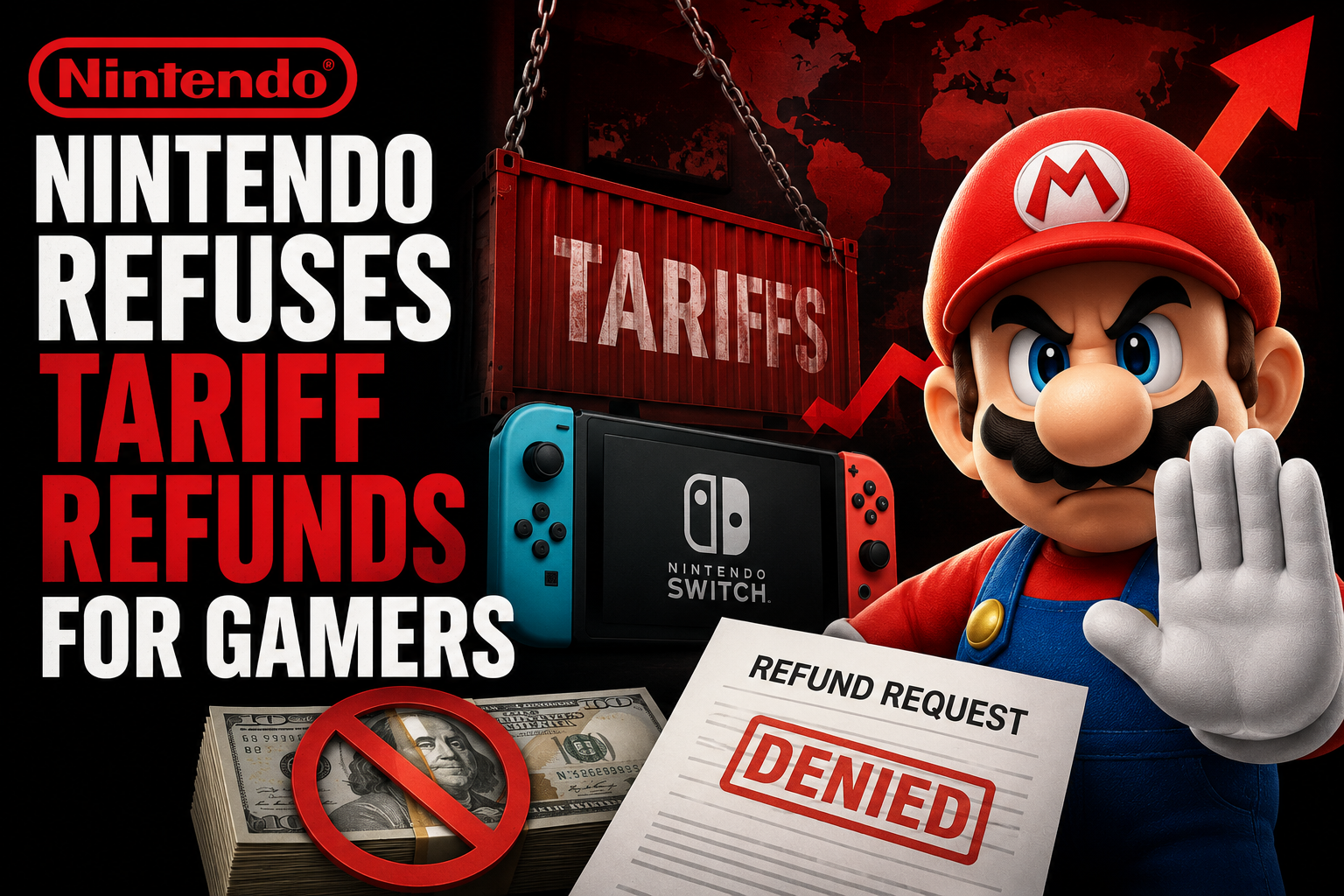
Nintendo Refuses Tariff Refunds for Gamers
That leaves consumers wondering whether any of the extra money they paid will ever come back to them as tariff refunds — and whether companies like Nintendo will be required to pass on rebates if the government hands back tariff proceeds. The legal and commercial tug-of-war over who keeps money tied to Trump-era tariffs is far from settled, and customers remain largely at the mercy of corporate decisions and slow-moving courts.
Tariff Refunds

Nintendo’s stance in the class-action lawsuit makes one thing clear: the company believes it legally owes nothing to buyers who paid higher prices during the tariff period. In filings, Nintendo argues consumers got precisely the products they paid for, and that any subsequent government action or reimbursement doesn’t retroactively change those commercial transactions. That position frames tariff-driven prices as a cost of doing business that retailers and manufacturers are under no obligation to reverse.
For gamers, the practical outcome is frustrating. Even if Nintendo successfully secures a refund from the government — a Nintendo tariff refund — the company says there’s no obligation to pass those savings to customers. Plaintiffs in the class-action lawsuit counter that consumers paid inflated amounts specifically because of tariffs and deserve a consumer rebate when those duties are returned. The courts will have to weigh contract law, consumer protection principles, and the specifics of any federal refund program.
Why this matters for Switch owners and prospective buyers
- Switch price hike fallout: The $30–$50 increases across original Switch models and higher accessory costs, like the Joy-Con 2 and Switch 2 Pro controller, left buyers on the hook for tariff-related inflation.
- Switch 2 price pressure: With Nintendo planning to raise the Switch 2 price this fall — citing component costs such as RAM — consumers face another round of higher sticker prices regardless of any tariff rulings.
- Industry-wide effect: Sony and Microsoft have also raised prices on flagship hardware, showing how Trump tariffs and soaring memory costs combine to push gaming hardware costs up across the board.
Even when the government permits companies to request refunds, there’s no automatic mechanism guaranteeing a consumer rebate. Companies can argue, as Nintendo did, that market conditions required price adjustments and that a refund to the manufacturer doesn’t create a contractual right for individual buyers to reclaim price differences.
That legal reasoning leaves customers with a few limited options: pursue the class-action route and hope the plaintiffs prevail, seek individual remedies where applicable, or pressure retailers and manufacturers through public campaigns and consumer advocacy groups. Historically, class-action lawsuits can force settlements that include rebates or vouchers, but they’re slow, uncertain, and often result in modest returns for a large pool of plaintiffs.
Longer term, the situation highlights how tariff policy and volatile component markets drive console price increases and squeeze consumers. Whether the courts or regulators ultimately require companies to redistribute any recovered tariff money will shape the economics of gaming hardware for years — and determine whether future price hikes tied to Trump tariffs or supply-cost shocks can be offset for buyers after the fact.