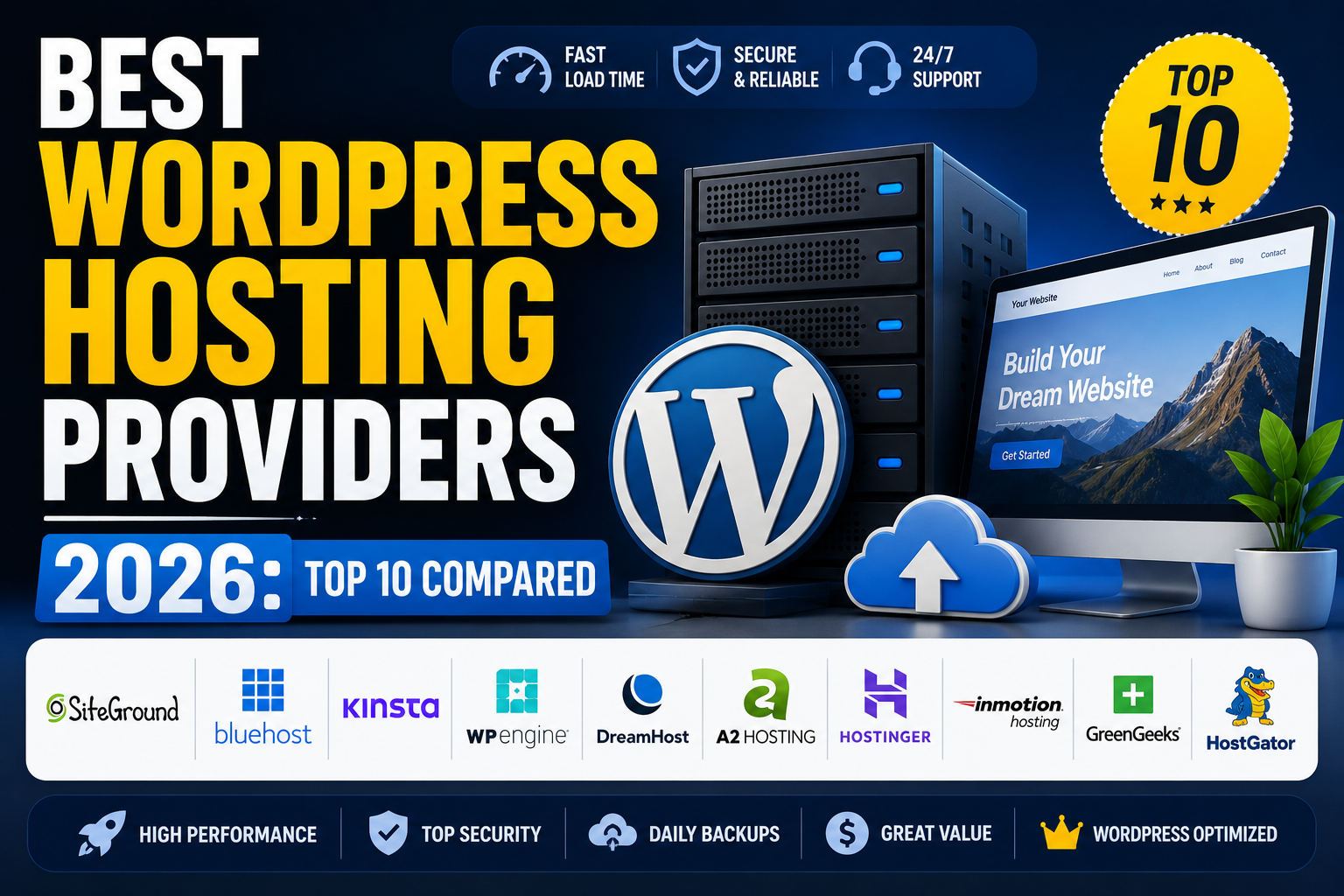
Best WordPress Hosting Providers 2026: Top 10 Compared
Find the best WordPress hosting providers 2026 for your site
Choosing the best WordPress hosting providers 2026 can make the difference between a fast, secure site that converts and one that frustrates visitors. This guide compares the top 10 hosts for 2026 with clear recommendations by use case—blogs, e-commerce, agencies, and budget sites—so you can choose with confidence.
How we picked these hosts
- Performance: real-world speed and uptime tests.
- Security: automated updates, malware scanning, and backups.
- Support: 24/7 WordPress-aware support and resources.
- Pricing and scalability: value across entry and growth tiers.
- Features: staging, CDN, PHP versions, and developer tools.
We also cross-checked platform requirements with WordPress.org and recent industry reviews to ensure current compatibility and best practices. See WordPress requirements at wordpress.org/about/requirements and an up-to-date hosting roundup at WPBeginner: wpbeginner.com.
Top 10 best WordPress hosting providers 2026
1. Kinsta — Best managed performance
- Best for: high-traffic sites and agencies needing top-tier speed.
- Key features: Google Cloud Platform C2 instances, built-in CDN, automatic scaling, daily backups.
- Starting price: mid-to-high range; value for performance.
- Pros: excellent speed, developer tools, and proactive support. Cons: costlier for small sites.
2. WP Engine — Best for enterprise WordPress
- Best for: enterprise sites, WooCommerce stores, and teams requiring premium support.
- Key features: advanced caching, Genesis framework, global CDN, security suite.
- Starting price: premium; enterprise plans available.
- Pros: robust platform and integrations. Cons: steeper price and limits on lower tiers.
3. SiteGround — Best for beginners who want strong support
- Best for: new WordPress users who value helpful support and easy setup.
- Key features: managed updates, staging, free CDN, fast PHP setup.
- Starting price: affordable entry plans.
- Pros: great support and reliability. Cons: renewal pricing can increase.
4. Bluehost — Best officially recommended beginner host
- Best for: bloggers and first-time WordPress site owners.
- Key features: one-click WordPress install, free domain (first year), 24/7 support.
- Starting price: low-cost introductory plans.
- Pros: simple onboarding and WordPress.org recommended. Cons: basic performance on lowest tiers.
5. Cloudways — Best flexible cloud hosting
- Best for: users who want cloud providers (DigitalOcean, AWS, GCP) with managed stack.
- Key features: pay-as-you-go scaling, multiple cloud choices, caching stack (Varnish, Redis).
- Starting price: competitive; varies by cloud provider.
- Pros: great value and flexibility. Cons: self-management curve compared to fully managed hosts.
6. Hostinger — Best budget option
- Best for: budget-conscious hobby sites and small business starters.
- Key features: low introductory pricing, custom control panel, WordPress acceleration.
- Starting price: very low.
- Pros: affordable and simple. Cons: fewer premium features and support limitations.
7. DreamHost — Best for straightforward policies and privacy
- Best for: users who want transparent pricing and strong privacy protections.
- Key features: official WordPress.org recommendation for some plans, free privacy, and long money-back guarantee.
- Starting price: affordable with solid guarantees.
- Pros: transparent terms and scalable plans. Cons: performance on shared tiers is modest.
8. A2 Hosting — Best for developer-friendly performance tweaks
- Best for: developers who want fine-tuned PHP, caching, and staging tools.
- Key features: Turbo servers, multiple PHP versions, SSH access.
- Starting price: moderate.
- Pros: speed-focused options. Cons: interface can feel dated to some users.
9. Nexcess — Best for WooCommerce stores
- Best for: growing WooCommerce shops needing optimized hosting and PCI compliance.
- Key features: performance optimizations for WooCommerce, automated scaling, developer tools.
- Starting price: mid-range with WooCommerce-specific tiers.
- Pros: tailored e-commerce features. Cons: not the cheapest for small shops.
10. Flywheel — Best for agencies and designers
- Best for: agencies and freelancers building multiple client sites with collaboration tools.
- Key features: local development tools, white-label options, workflow-focused UI.
- Starting price: mid-range for managed plans.
- Pros: excellent agency tools. Cons: advanced features at higher tiers.
Choosing the right host: quick recommendations
- For speed and scale: choose Kinsta or WP Engine.
- For tight budgets: Hostinger or Bluehost.
- For WooCommerce: Nexcess or WP Engine.
- For cloud flexibility: Cloudways.
- For agencies: Flywheel or Kinsta.
FAQ
Q: How much should I expect to pay for reliable WordPress hosting in 2026?
Expect entry-level shared hosting from $2–10/month, managed WordPress from $15–50/month for small to medium sites, and $100+/month for enterprise workloads. Pricing varies by features and traffic.
Q: Do I need managed WordPress hosting?
If you prefer automatic updates, built-in caching, daily backups, and WordPress-aware support, managed hosting is recommended. For developers comfortable with server management, cloud VPS solutions can be cheaper and more flexible.
Q: How important is a CDN?
A Content Delivery Network (CDN) improves global load times and helps with security and traffic spikes. Many modern WordPress hosts include a CDN or offer easy integration.
Conclusion
Finding the best WordPress hosting providers 2026 depends on your priorities: performance, price, e-commerce features, or agency workflows. Use the recommendations above as a starting point—test two candidates where possible (most hosts offer money-back guarantees) and prioritize performance, backups, and support as your non-negotiables.
For further reading on platform requirements and current hosting advice, refer to WordPress.org’s requirements and WPBeginner’s hosting roundup. Independent reviews from outlets like TechRadar also provide helpful real-world benchmarks.