Japan’s First Electric Kei Car Offers Over 300 km Range
Introduction to Electric Kei Cars
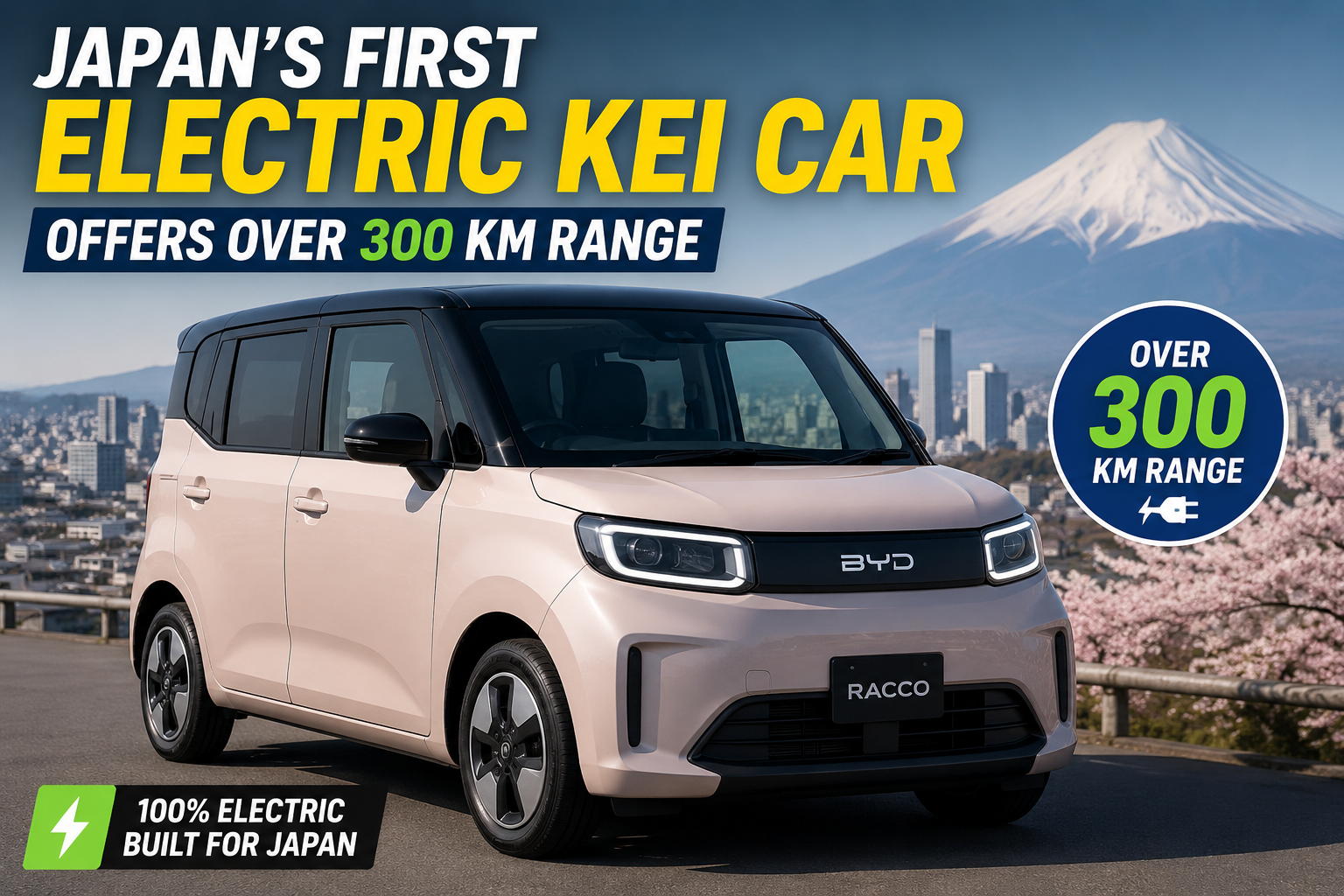
The Japanese automotive market has witnessed a significant milestone with the launch of the BYD Racco, the country’s first electric kei car to boast a range of over 300 km. This compact electric vehicle is specifically designed for Japan’s unique kei car segment, which is characterized by strict size and power restrictions. As a result, the market has traditionally been dominated by domestic manufacturers such as Honda, Nissan, Suzuki, and Daihatsu. However, with the introduction of the Racco, BYD is poised to challenge the status quo and make its mark on the electric kei car scene.
Key Features and Specifications
The BYD Racco is available in two trims, with the base model featuring a 22.4 kWh battery pack that offers a range of 210 km. In contrast, the higher trim is equipped with a 35.84 kWh pack that delivers an impressive 320 km of range. Despite its compact size, the Racco is packed with an array of features, including a power sliding door, NFC phone key, heated front seats and steering wheel, and vehicle-to-load capability. Additionally, the car’s cargo space can be expanded to a substantial 1,372 liters with the rear seats folded flat, making it an ideal choice for daily commuting and urban driving.
Competitive Pricing and Market Strategy
The BYD Racco is priced competitively, with the base trim starting at 1.95 million yen (~$11,900) before tax and subsidy. This makes it more affordable than the Nissan Sakura electric kei car. Furthermore, the Japanese government’s national EV subsidy of 150,000 yen (~$915) reduces the cost even further, making the Racco an attractive option for budget-conscious buyers. BYD’s strategy of offering a low-cost, high-feature electric kei car is reminiscent of its successful Seagull model, which has become one of the cheapest EVs available globally.
Market Impact and Future Prospects
The launch of the BYD Racco marks a significant turning point in the Japanese electric kei car market. With its impressive range, features, and competitive pricing, the Racco is poised to challenge the dominance of established players such as Honda’s N-Box, which sold over 56,000 units in Japan during the first quarter of 2026. As the market continues to evolve, it will be interesting to see how BYD’s formula for success in the global EV market translates to the unique Japanese kei car segment.
Conclusion
In conclusion, the BYD Racco represents a major breakthrough in the Japanese electric kei car market, offering a unique combination of range, features, and affordability. As the market continues to grow and evolve, the Racco is likely to play a significant role in shaping the future of electric kei cars in Japan. With its competitive pricing, impressive features, and eco-friendly credentials, the BYD Racco is an electric kei car that is sure to appeal to a wide range of buyers, from environmentally conscious consumers to budget-savvy commuters.