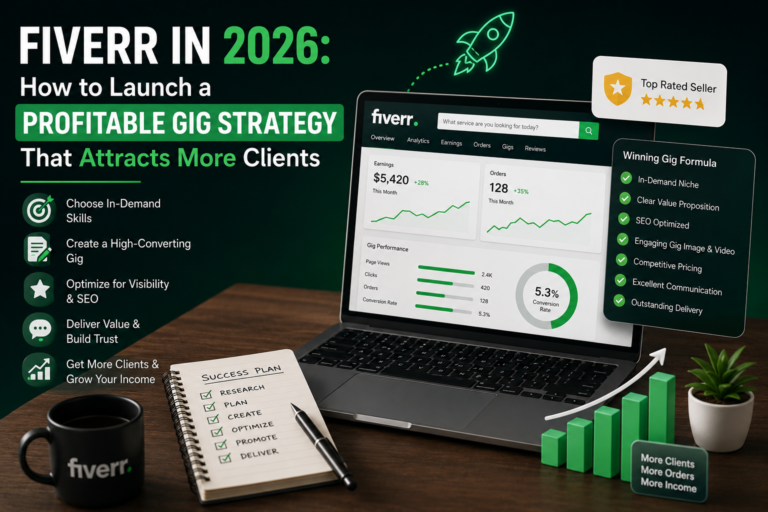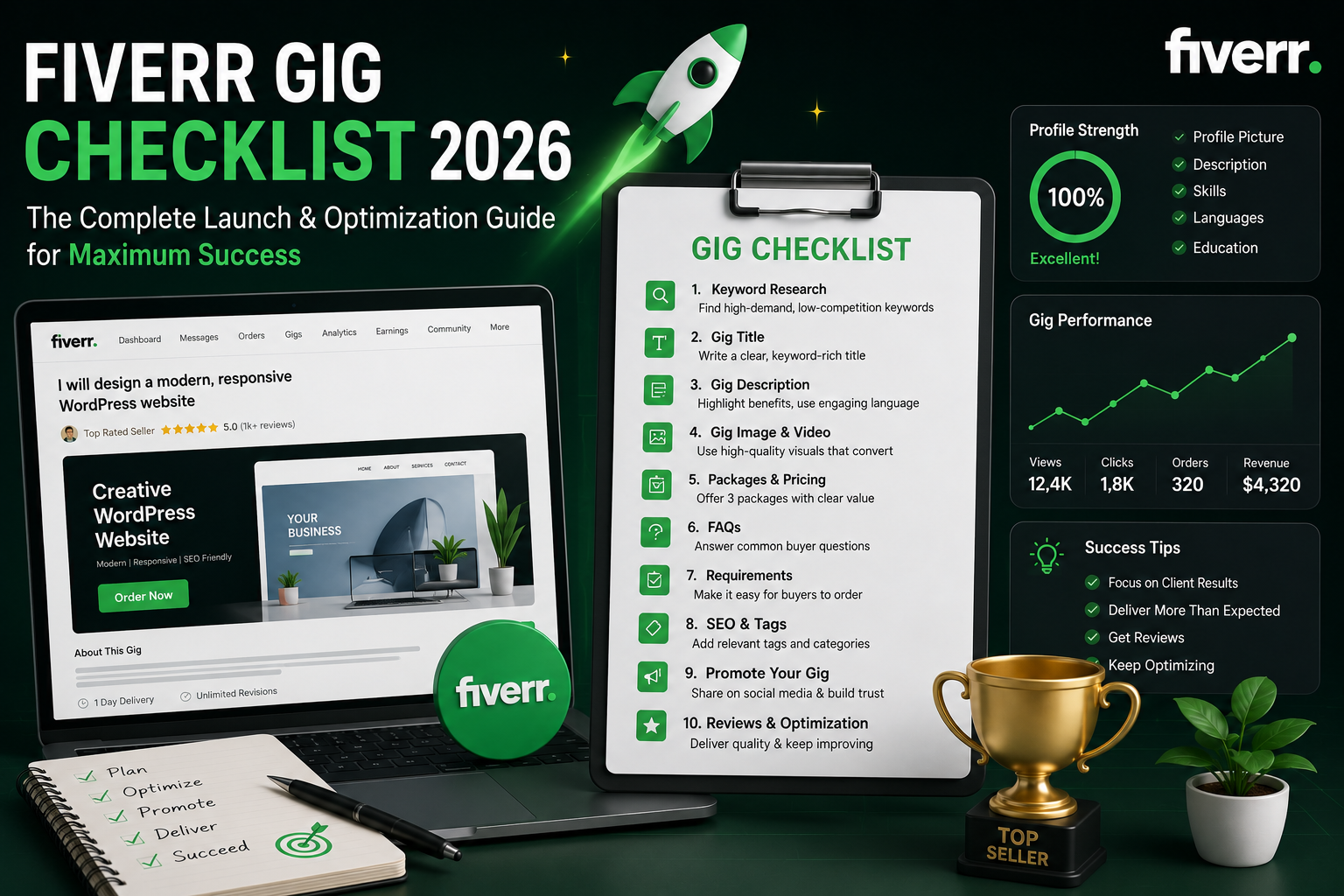
Fiverr Gig Checklist 2026: The Complete Launch & Optimization Guide for Maximum Success
Launch-Ready Fiverr Checklist for 2026
If you want to convert views into orders on Fiverr in 2026, launching a gig isn’t enough. Competition is stronger, buyer expectations have evolved, and search behavior on the platform favors detailed, optimized gigs. This checklist walks you through every essential step — from positioning and pricing to SEO and delivery — so your Fiverr gig launches with momentum and sustains growth.
Why this checklist matters
Fiverr remains one of the largest freelance marketplaces; effective gigs combine clear value propositions with platform-optimized content. For up-to-date platform policies and best practices, check the official Fiverr Help Center and blog. These sources provide guidance on allowed services, buyer-seller interaction policies, and platform updates that can affect your gig’s visibility (Fiverr Help Center, Fiverr Blog).
Pre-launch: Positioning & Research
- Define your niche: Pick a specific service you can deliver consistently at high quality. Narrowing focus boosts conversion rates.
- Analyze top competitors: Study 10 top gigs in your niche — note packages, delivery time, extras, and customer feedback patterns.
- Keyword research for Fiverr SEO: Compile 6–10 buyer-focused keywords and phrases. Use Fiverr search suggestions, Google Autocomplete, and related query tools to identify terms buyers use.
- Set goals and metrics: Decide your target conversion rate, monthly orders, average order value, and response time.
Gig Creation: Title, Tags, and Category
- Write a clear, benefit-driven title: Include your primary keyword and the top buyer benefit within 80 characters.
- Choose the correct category and subcategory: Misclassification reduces discoverability on Fiverr’s search and category pages.
- Select precise tags and metadata: Use up to five tags that match buyer intent (e.g., ‘logo design’, ‘fast delivery’, ‘eCommerce’).
Gig Description and FAQ: Persuade and Preempt
- Start with a one-line value proposition: Immediately tell buyers what they’ll get and why it’s different.
- Use scannable sections: Use short paragraphs and bullet lists to highlight deliverables, process, and expected results.
- Include a clear scope and what’s excluded: Prevent scope creep and reduce revision requests.
- Add 5–7 FAQs: Address common buyer concerns such as refund policy, revision limits, file formats, and communication windows.
Pricing, Packages, and Extras
- Offer tiered packages: Basic, Standard, and Premium should scale by features and delivery time.
- Price for value and momentum: Consider introductory pricing to build reviews, then raise rates as demand grows.
- Use gig extras strategically: Offer faster delivery, source files, or add-ons that increase average order value.
Visuals: Gallery, Video, and Portfolio
- Create high-quality images: Use clean mockups or before/after examples showcasing outcomes.
- Add a short gig video: Videos increase conversions; keep it under 60 seconds and show process and results.
- Showcase real samples: Use past client work or well-branded demos. Ensure you have rights to display these samples.
Delivery & Communication: Systems That Scale
- Set realistic delivery timelines and consistently meet them — on-time delivery improves ranking and buyer trust.
- Use templated messages for common scenarios: initial intake, mid-project updates, and delivery notes.
- Collect required files upfront: Use clear intake forms to reduce delays and revisions.
Post-launch Optimization & Growth
- Monitor analytics: Track impressions, clicks, conversion rate, and cancellation rate. Adjust title, tags, and description based on data.
- Request reviews strategically: Politely ask satisfied buyers for feedback and clarify the best way to leave constructive reviews.
- Run promotions and coupons: For repeat buyers, offer discounts to increase lifetime value.
- Scale with workflows: Use scripts, templates, and subcontractors when demand exceeds personal capacity.
Compliance and reputation
Follow Fiverr’s terms and community standards to avoid penalties. For insights on freelancing best practices and economic trends that affect demand, see coverage from outlets like Forbes on the freelance economy.
Checklist Summary
- Niche and competitor research complete
- Keyword list with primary and secondary terms
- Optimized title, category, tags, and metadata
- Persuasive gig description with FAQs
- Tiered pricing, reasonable delivery times, and meaningful extras
- High-quality images and a short video
- Clear intake process and templated communication
- Analytics tracking and review strategy
- Compliance with Fiverr policies
Frequently Asked Questions (FAQ)
How long does it take for a new Fiverr gig to gain traction?
Traction varies by niche and initial pricing. Expect 2–8 weeks of active promotion, optimization, and perhaps introductory pricing to collect the first reviews and rank for your target keywords.
What are the most important Fiverr ranking factors?
On-platform factors include conversion rate, response time, on-time delivery, review score, and gig relevance (title, tags, description). Off-platform traffic can also boost impressions.
Should I include a gig video?
Yes. Gigs with short, clear videos generally convert better because they demonstrate trust and clarify the offering. Keep videos professional and under 60 seconds.
How do I price my gigs in 2026?
Price competitively but reflect your value. Consider launching with a promotional price to build reviews, then incrementally raise rates. Use tiered packages to capture different buyer budgets.
Where can I find official Fiverr rules and updates?
Consult the Fiverr Help Center and Fiverr Blog for policy updates, best practices, and feature rollouts.
Conclusion
Optimizing a Fiverr gig in 2026 requires careful research, platform-aware SEO, persuasive presentation, and reliable delivery systems. Use this checklist to build launch-ready gigs, monitor performance, and iterate based on buyer behavior and analytics. Consistent optimization, high-quality visuals, and excellent buyer communication are the reliable levers for sustainable growth on Fiverr.