
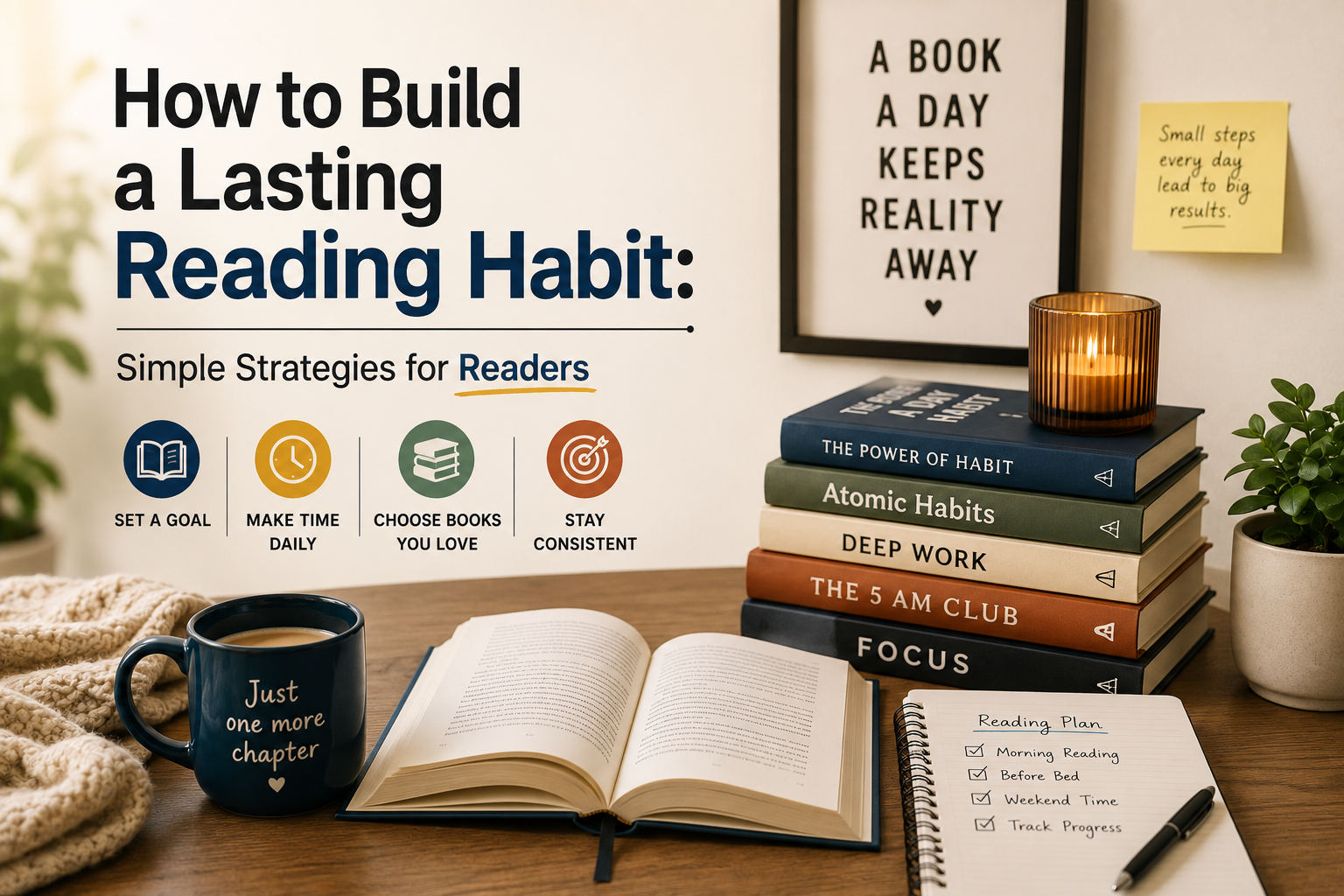
How to Build a Lasting Reading Habit: Simple Strategies for Readers
Most of us want to read more — for pleasure, learning, or mental reset — but life gets in the way. Building a reading habit isn’t about guilt or speed; it’s about creating gentle, repeatable rituals that make reading as natural as morning coffee. Below are practical, proven strategies that fit into busy lives and help you finish more books without turning reading into a chore.
Why build a reading habit?
Reading consistently offers mental stimulation, improved focus, expanded vocabulary, and a broader perspective on life. Beyond those measurable benefits, reading cultivates empathy and helps you relax. A habit turns occasional bursts of reading into sustained, compounding benefits.
Key benefits
- Improved concentration and cognitive endurance
- Steady progress in knowledge and skills
- Better sleep when reading replaces screen time before bed
- A regular source of enjoyment and stress relief
Practical strategies that actually work
1. Start small and make it inevitable
A 10-minute reading habit is powerful. Commit to just 10 minutes a day or one chapter. Small commitments reduce resistance and create momentum. Place a book where you’ll see it: by your bed, next to the couch, or on your desk.
2. Anchor reading to existing routines
Attach reading to a stable daily habit. Read after your morning coffee, during lunch, or before bed. The anchor technique leverages existing routines to make your new behavior automatic.
3. Use multiple formats
Combine physical books, e-books, and audiobooks. Audiobooks are ideal for commutes, walks, or chores; e-books are handy on phones for unexpected pockets of time. Mixing formats helps you keep momentum when life gets busy.
4. Embrace the two-book rule
Always have two books: one you read for enjoyment and another for learning. If one doesn’t feel right, switch without guilt. Forcing yourself through a book kills the habit more often than it helps.
5. Track progress and celebrate small wins
Use a simple tracker, journal, or apps like Goodreads to log books and pages. Seeing progress builds motivation. Celebrate milestones: finishing your fifth book of the year, reading every day for a month, or finishing a challenging title.
6. Create a reading environment
Design a comfortable, low-distraction space. Good light, a comfortable seat, and a small routine (a mug of tea, a blanket) signal your brain that it’s time to read. Limit screens nearby during sessions.
7. Use micro-reading sessions
Micro-sessions of 5 to 15 minutes add up. Read during a short break, while waiting, or between tasks. These small pockets of time can transform into substantial reading progress over weeks.
8. Curate a dynamic TBR list
Keep a shortlist of books you genuinely want to read. Rotate through genres to avoid fatigue. Libraries, recommendations from friends, and curated lists help keep your queue fresh and exciting.
A 30-day starter plan
- Week 1: Commit to 10 minutes daily. Choose one enjoyable, short book.
- Week 2: Increase to 20 minutes on three days. Add an audiobook for commutes.
- Week 3: Track every session. Join an online reading group or challenge.
- Week 4: Review progress. Set a monthly book goal and pick the next titles.
This progressive approach prevents burnout and builds confidence.
Overcoming common obstacles
Too tired at night?
Shift reading to morning or use audiobooks. Even short morning sessions reset your day.
I start but don’t finish books
Rotate books; abandon without guilt after 50 pages if it’s not engaging. Finishing matters, but quality of engagement matters more.
No time because of work and family
Carve micro-windows: read during lunch or while kids nap. Involve family with shared-reading time to model the habit for kids.
Resources and tools
- Goodreads or similar trackers for logging and discovering books
- Library apps like Libby for free e-books and audiobooks
- Pomodoro timers to structure reading sprints
- Curated reading lists and newsletters for recommendations
FAQ
How long does it take to form a reading habit?
Habit formation varies, but consistent practice for 21 to 66 days builds automaticity. The key is regular, small actions more than the calendar count.
What if I fall off the habit?
Start again without judgment. Analyze what broke the chain and adjust: shorter sessions, different timing, or a different format might help.
Is speed reading useful for building a habit?
Speed reading techniques can help but often sacrifice retention. Focus first on consistency and comprehension; speed can come later, if desired.
Can reading actually reduce stress?
Yes. Studies show reading reduces stress and helps unwind. Replacing screen time with reading before bed often improves sleep quality.
How do I choose books that stick?
Follow curiosity. Read reviews, ask friends, and sample the first chapter. If a book doesn’t engage you within a reasonable stretch, it’s fine to move on.
Conclusion
Building a reading habit is a gradual, flexible process. Start small, anchor sessions to daily routines, use multiple formats, and track progress. Above all, keep reading enjoyable — the best habit is one you want to return to. With consistency and a few simple tools, you can transform sporadic reading into a steady, rewarding practice that enriches your life.