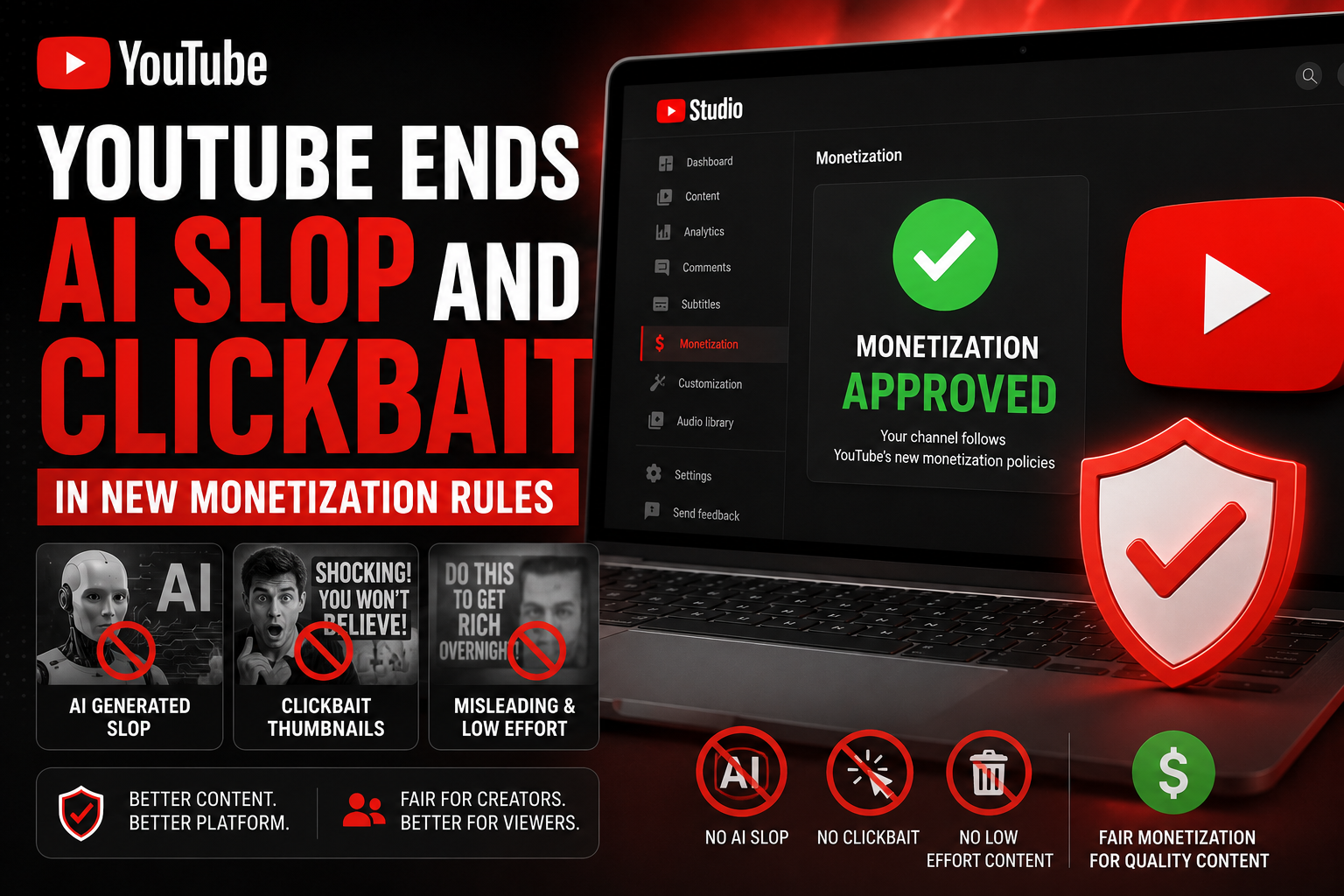
YouTube Ends AI Slop and Clickbait in New Monetization Rules
YouTube monetization rules: what creators need to know

YouTube monetization rules are changing the calculus for anyone relying on automated production to generate ad revenue. The platform’s update makes clear that channels built on repetitive AI outputs, clickbait tactics, or synthetic personas face demonetization unless they add genuine human value.
Beginning with the July rollout, enforcement will prioritize channels that most closely match content-farming patterns: high-volume uploads with little narrative structure, recycled tutorials, and videos stitched together from templates or CGI with negligible variation. These signals—rather than the mere use of AI tools—will determine whether a video qualifies for the YouTube Partner Program.
How enforcement will likely play out
YouTube has said enforcement will scale over time, combining automated detection with human review. That means creators should expect both algorithmic filtering for obvious patterns and manual checks for borderline cases. Channels flagged for producing low-effort or emotionally manipulative content may lose ad revenue or be removed from YPP until they demonstrate meaningful changes.
Practical steps creators should take
- Prioritize original storytelling: Add clear human perspectives, context, and narrative arcs that distinguish your videos from template-driven output.
- Avoid manipulative hooks: Steer clear of staged rescues, sensationalized thumbnails, or other tactics designed solely to provoke emotional clicks.
- Be cautious with synthetic personas: Do not use AI-generated avatars to dispense high-stakes finance, health, or legal advice without real human oversight or credentialing.
- Improve production depth: Invest time in scripting, editing, and research so each upload demonstrates effort and expertise.
- Monitor channel metrics and appeals: If demonetized, review YouTube’s feedback, correct issues, and appeal with evidence of substantive changes.
Why this matters for creators and advertisers
The revised guidance protects advertiser confidence and user experience by shrinking the space for content farming and deceptive clickbait. For creators, it raises the bar: generative tools can still be powerful allies, but must be paired with original thought and responsible use.
Ultimately, adapting to these changes means leaning into creativity, accountability, and quality. Channels that combine AI tools with authentic human insight will be best positioned to retain monetization and thrive under YouTube’s evolving ad revenue policy.