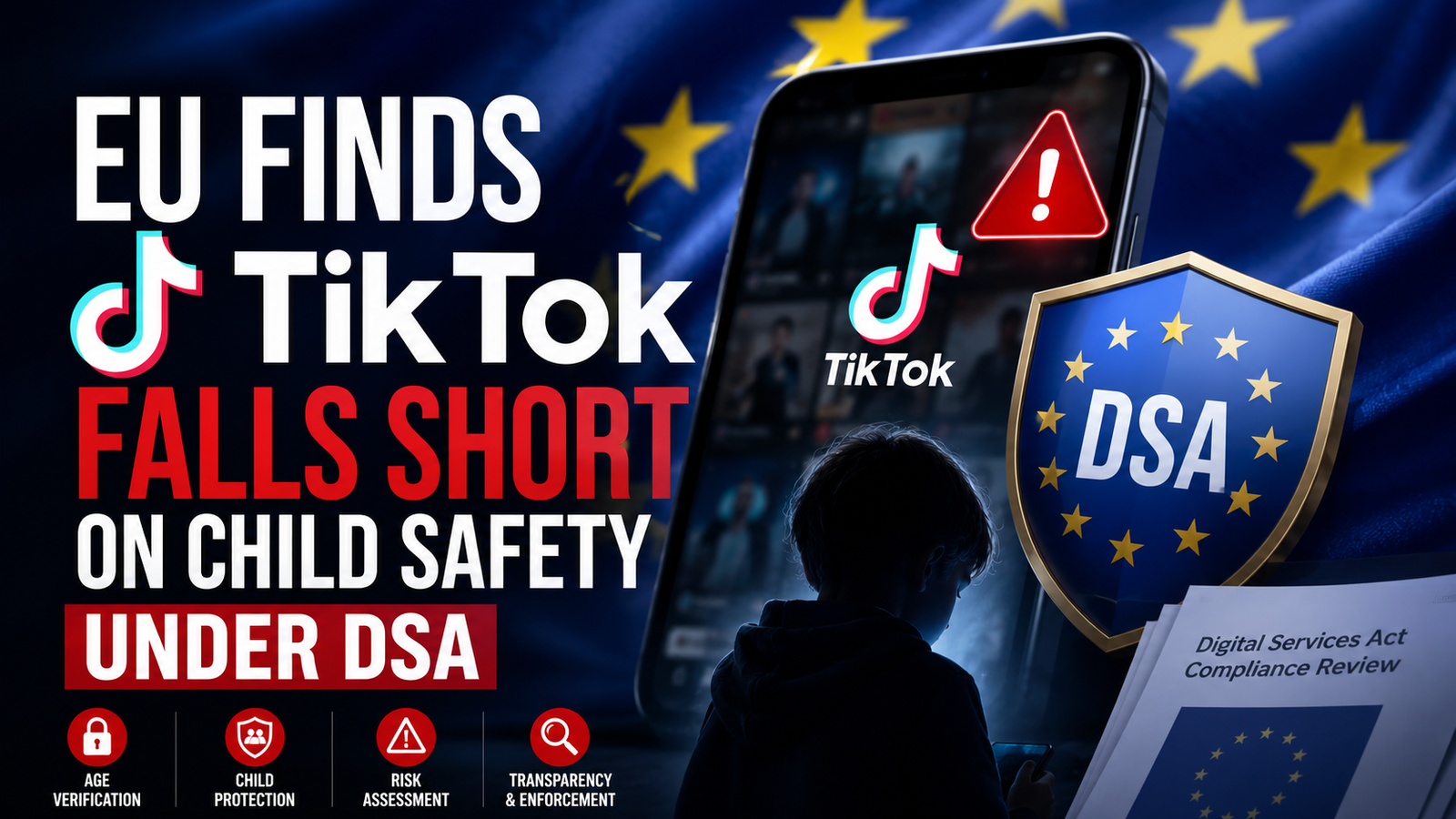
EU Finds TikTok Falls Short on Child Safety Under DSA
TikTok child safety: what’s next under the DSA
TikTok child safety is now the focus as the EU’s preliminary findings move the case into a formal review phase. The Commission’s initial assessment gives TikTok a chance to respond before any final determination under the Digital Services Act.
If the Commission remains unconvinced after TikTok’s reply, it can issue a non‑compliance decision and impose penalties — potentially up to 6% of the company’s global annual revenue. That outcome would follow the standard DSA enforcement pathway and could include requirements to change product defaults or user-facing controls.
How the process will play out
- Formal reply: TikTok has the opportunity to submit arguments and evidence addressing the EU TikTok investigation’s concerns about minors privacy settings and recommendation systems.
- Commission assessment: Regulators will review TikTok’s response against DSA obligations, including whether child safety is built into the service by design rather than left as an opt‑in feature.
- Possible outcomes: The Commission may close the case, require remedial measures, or issue a non‑compliance decision with fines or binding orders to change practices such as TikTok default privacy settings or For You feed recommendations involving minors.
Wider implications for social media safety
Beyond the company at hand, this probe signals stronger scrutiny from EU regulators over online child protection across the industry. The investigation forms part of several ongoing DSA probes into TikTok and reflects a broader push to ensure platforms adopt safer defaults for younger users.
Regulators are particularly focused on automatic recommendations and public account visibility because these features can increase exposure to unwanted contact or exploitation. Recommendations being removed from the For You feed for minors, and restricting public content visibility to approved followers, are specific measures the Commission has highlighted as preferable to manual opt‑in controls.
For parents, policymakers and other platforms, the case will be watched closely. A finding of non‑compliance or the imposition of TikTok fines could prompt faster adoption of stricter default privacy, tighter messaging controls for teens, and clearer design requirements under the Digital Services Act aimed at bolstering online child protection.