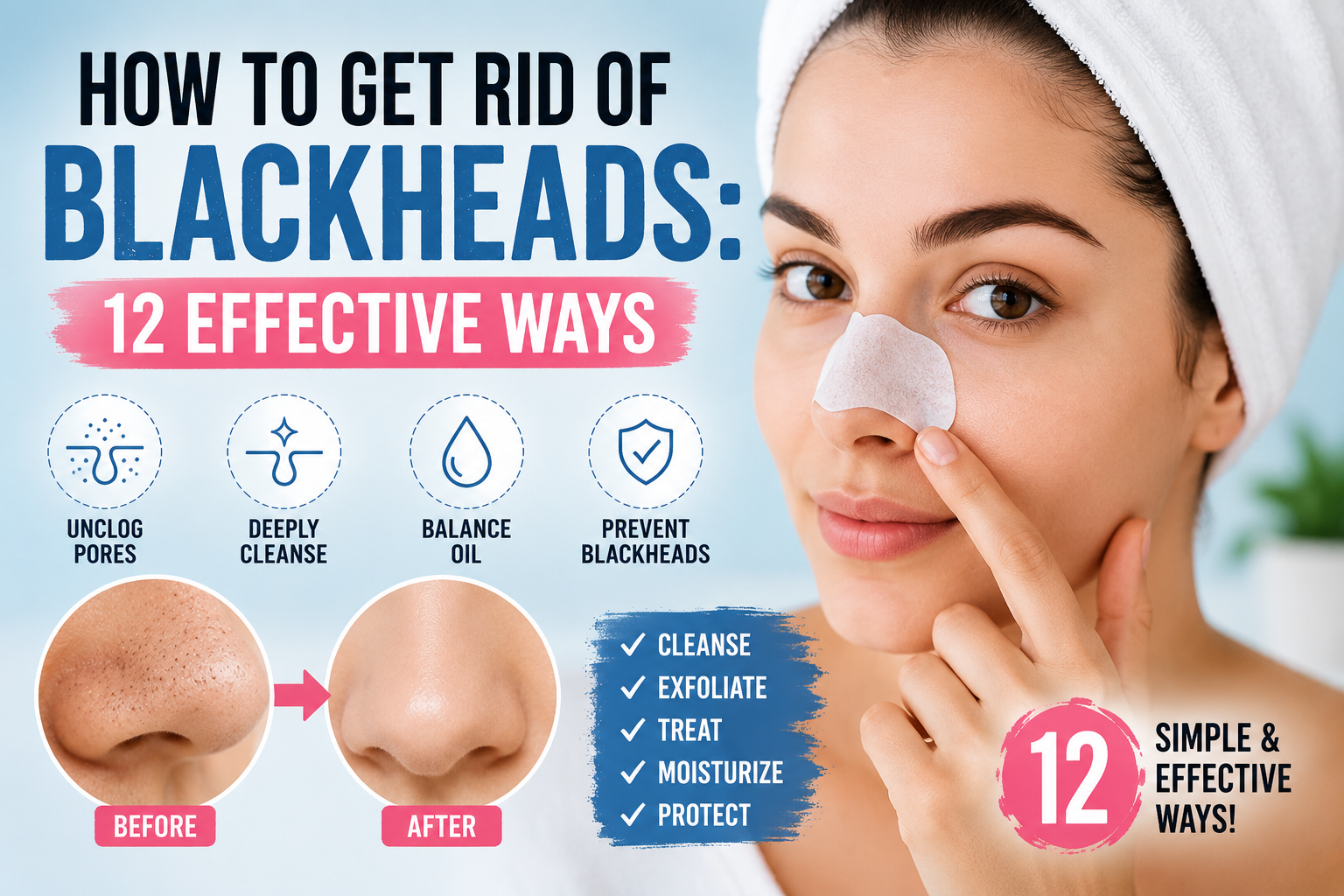
How to Get Rid of Blackheads: 12 Effective Ways
How to Get Rid of Blackheads
If you’re wondering how to get rid of blackheads, there are safe, effective options that range from daily cleansers to professional treatments. Blackheads are common and often stubborn, but the right routine—gentle cleansing, periodic exfoliation, and targeted ingredients—can clear existing comedones and help prevent new ones.
This guide covers what blackheads are, why you shouldn’t squeeze them, and six practical methods that dermatologists and skin experts recommend, including salicylic acid for blackheads, AHAs and BHAs exfoliation, clay and charcoal masks, topical retinoids, and cautious use of physical tools.
What Are Blackheads and How They Form
Blackheads are open comedones: pores that become clogged with a mix of dead skin cells and excess oil (sebum). Because the pore opening remains exposed to air, the trapped material oxidizes and takes on a dark appearance—hence the name.
Anyone can develop blackheads, though oily skin types are more prone. They commonly occur on the nose, chin, forehead and other areas with more active sebaceous glands. Regular exfoliation and oil control help reduce buildup, while targeted products that dissolve oil and loosen dead skin cells make it easier to remove or prevent blackheads without aggressive measures.
Why You Shouldn’t Squeeze or Pop Blackheads
It’s tempting to pick at blackheads, but squeezing can push debris deeper into the pore, increase inflammation, and cause scarring or dark spots. Manual popping also raises the risk of infection and prolonged healing.
Instead of DIY extraction, use gentle chemical exfoliants, masks, or see a trained provider for professional extraction blackheads if manual removal is necessary.
1. Cleanse with Salicylic Acid
Salicylic acid is a beta-hydroxy acid (BHA) that dissolves the oil and dead skin that clog pores, making it a top choice when you want to get rid of blackheads. As an ingredient, it penetrates into the follicle and helps loosen the plug so it can be washed away rather than squeezed out.
Start with a daily cleanser containing salicylic acid and use it once a day—many people prefer it in the evening. If your skin tolerates it, you can increase
7. Consider Chemical Peels
If you want to get rid of blackheads, chemical peels that contain AHAs or BHAs can help by exfoliating the top layers of skin and loosening the plugs inside pores. In-office peels performed by a dermatologist or licensed aesthetician are stronger and more controlled, so they can produce more noticeable improvement in texture and pore appearance with minimal risk when done properly.
At-home peel products are milder and useful for maintenance, but they require careful use—follow product instructions, patch-test first, and avoid combining strong peels with other harsh exfoliants or retinoids to reduce irritation. Expect some peeling, sensitivity, or brief redness after treatments; downtime varies by peel strength. If you have very dry, sensitive, or inflamed skin, consult a dermatologist before starting peels, since improper use can worsen irritation and make blackheads harder to manage.
8. Use Noncomedogenic Products
Choosing noncomedogenic products helps prevent new comedones by avoiding ingredients that are likely to clog pores. Look for oil-free, lightweight moisturizers, sunscreens, and makeup labeled “noncomedogenic” or “won’t clog pores.”
Read ingredient lists and favor formulations made for acne-prone or oily skin. Even products marketed as “natural” can be pore-clogging if they contain heavy oils or waxes. Switching to noncomedogenic creams, foundations, and sunscreens is a simple but effective step in any plan to get rid of blackheads and keep pores clearer over time.
9. Don’t Sleep in Your Makeup
Sleeping in makeup traps dirt, oil, and pollutants against the skin and increases the risk of clogged pores and blackheads. Make removing makeup a nightly habit to maintain clear pores and healthy skin.
For heavy or waterproof makeup, consider double-cleansing: an initial oil-based or micellar wipe to dissolve makeup, followed by a gentle salicylic-acid cleanser to clean pores. Even on late nights, a quick, proper cleanse is better than skipping it—regular removal prevents buildup that contributes to blackhead formation.
10. Stay Away from Pore Strips and DIY Extraction Tools
By now, you know that squeezing, picking, or scratching acne is never a good idea. Even so, it’s easy to be tempted by products that claim to instantly remove stubborn blackheads.
Pore strips, peel-off masks, and extraction tools have become increasingly popular because they promise clearer pores with minimal effort. While these products may remove some of the debris trapped inside your pores, they can also strip away healthy components your skin needs, including natural oils and tiny hair follicles.
Losing these protective elements can leave your skin dry, sensitive, and irritated. When this happens, your sebaceous glands often respond by producing even more oil to compensate, which can eventually lead to additional blackheads.
There are also specialized metal and plastic extraction tools designed to remove clogged pores. These can be effective when used correctly—but the important distinction is that they are intended for professional use.
Dermatologists receive extensive training to use these instruments safely. Inexperienced use, however, can damage the skin, causing scratches, cuts, or even permanent scarring.
11. Skip Benzoyl Peroxide for Blackheads
Many over-the-counter acne treatments contain benzoyl peroxide, making it a common choice for treating breakouts. However, it isn’t the best option for every type of acne.
Benzoyl peroxide primarily works by reducing inflammation and eliminating acne-causing bacteria. This makes it effective for inflamed blemishes such as pimples, cysts, and pustules.
Blackheads are different. They are non-inflammatory and aren’t caused by bacterial infections, so benzoyl peroxide generally has little effect on removing or preventing them.
12. Consider Professional Blackhead Removal
Even the most effective blackhead treatment routine takes time. In most cases, noticeable improvements can take anywhere from six to twelve weeks.
If blackheads continue to appear—or existing ones don’t improve—despite following a consistent skincare routine, it may be time to consult a dermatologist.
A dermatologist can safely remove stubborn blackheads using professional extraction techniques that minimize the risk of skin damage. They may also recommend treatments such as prescription-strength retinoids or a series of dermabrasion procedures to help keep blackheads from returning.