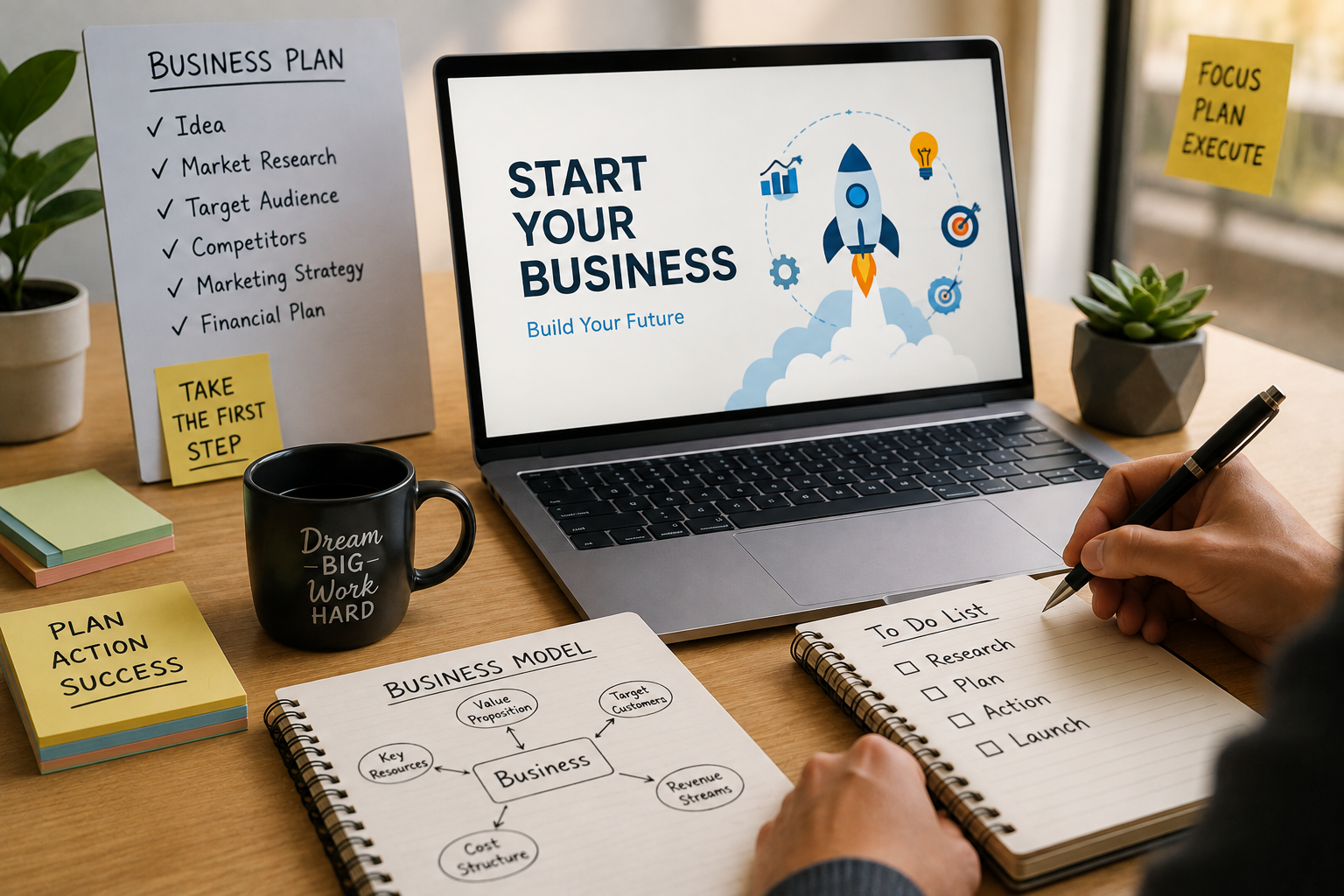
A Beginner’s Guide to Starting a Small Business in 2026
Starting a business is one of the most exciting ways to build financial independence, pursue your passion, and create long-term opportunities. While entrepreneurship comes with challenges, starting a small business in 2026 has become more accessible than ever thanks to digital tools, online marketplaces, cloud software, and social media marketing.
Whether you want to launch an online store, provide freelance services, open a local shop, or build a technology startup, success begins with careful planning rather than luck. Many successful businesses started with a simple idea and gradually expanded through smart decision-making and consistent effort.
This beginner-friendly guide explains every essential step involved in starting a small business, from developing your idea to attracting your first customers. By following these proven strategies, you’ll be well prepared to turn your business vision into reality.
Why 2026 Is a Great Time to Start a Small Business
Technology continues to lower the barriers to entrepreneurship. Today, business owners can launch websites, accept online payments, automate marketing, and reach customers worldwide without investing large amounts of money.
Some reasons why 2026 offers excellent opportunities include:
- Growing e-commerce industry
- Increased demand for digital services
- AI-powered business tools
- Easier access to global customers
- Affordable website builders and cloud software
- Flexible remote work opportunities
While competition is increasing, businesses that provide value, solve real problems, and focus on customer satisfaction still have significant opportunities for growth.
Step 1: Develop a Business Idea
Every successful business begins with a strong idea.
However, having an idea alone isn’t enough. Your business should solve a real problem, fulfill a need, or improve an existing product or service.
Ask yourself these questions:
- What skills do I have?
- What problems can I solve?
- What industries interest me?
- What products are currently in demand?
- Can I offer something different from competitors?
Many entrepreneurs start by turning their hobbies or professional experience into profitable businesses.
Popular small business ideas include:
- Online retail stores
- Digital marketing agencies
- Graphic design services
- Content writing
- Home-based food businesses
- Software development
- Virtual assistant services
- Consulting businesses
- Educational courses
- Handmade products
Research your idea carefully before investing time and money.
Validate Your Business Idea
One of the biggest mistakes beginners make is assuming customers will automatically buy their products.
Before starting a small business, validate your idea by researching your market.
You can:
- Search Google Trends
- Read customer reviews on competitor websites
- Join online communities
- Conduct surveys
- Ask potential customers for feedback
- Analyze social media discussions
This research helps identify customer pain points and opportunities to improve existing solutions.
Identify Your Target Audience
Understanding your customers is essential for business success.
Your target audience includes the people most likely to purchase your products or services.
Consider factors such as:
- Age
- Gender
- Location
- Income level
- Occupation
- Interests
- Buying habits
The better you understand your audience, the easier it becomes to create products and marketing campaigns that appeal to them.
Study Your Competitors
Competitor research helps you discover what works in your industry.
Analyze competitors by looking at:
- Pricing
- Website quality
- Product range
- Customer service
- Marketing strategies
- Customer reviews
- Social media activity
Instead of copying competitors, identify areas where you can provide a better customer experience or unique value.
Step 2: Create a Business Plan
A business plan acts as the roadmap for your company.
It helps define your goals, organize your ideas, and prepare for future challenges.
A good business plan should include:
Executive Summary
Provide a brief overview of your business, including your mission and objectives.
Business Description
Explain:
- What your business does
- Who it serves
- What makes it unique
Market Analysis
Include research about:
- Industry trends
- Customer demand
- Competitors
- Growth opportunities
Products or Services
Describe exactly what you plan to sell.
Include details about:
- Features
- Benefits
- Pricing
- Customer value
Marketing Strategy
Explain how customers will discover your business.
Include:
- SEO
- Social media
- Email marketing
- Paid advertising
- Referral programs
- Content marketing
Financial Plan
Estimate:
- Startup costs
- Monthly expenses
- Expected revenue
- Break-even point
- Profit projections
Creating a business plan helps reduce uncertainty and improves decision-making.
Step 3: Choose the Right Business Structure
Before starting a small business, decide on the legal structure that best fits your goals.
Common business structures include:
- Sole Proprietorship
- Partnership
- Limited Liability Company (LLC)
- Corporation
Each option has different tax responsibilities, legal protections, and administrative requirements.
If you’re unsure, consult a qualified accountant or business advisor before registering your business.
Step 4: Register Your Business
After selecting your business structure, you’ll need to register your business according to your country’s legal requirements.
Depending on your location, this may include:
- Registering your business name
- Obtaining licenses
- Applying for permits
- Registering for taxes
- Opening a business bank account
Following legal requirements from the beginning helps avoid problems later.
Step 5: Secure Funding
Many businesses require startup capital.
The amount depends on your industry and business model.
Possible funding options include:
Personal Savings
Many entrepreneurs start by investing their own money.
Advantages:
- No debt
- Full ownership
- Greater flexibility
Disadvantages:
- Higher personal financial risk
Small Business Loans
Banks and financial institutions offer loans designed for startups.
Prepare:
- Business plan
- Financial projections
- Credit history
- Required documentation
Investors
Angel investors and venture capital firms may invest in businesses with strong growth potential.
In exchange, they usually receive equity in the company.
Crowdfunding
Crowdfunding platforms allow entrepreneurs to raise money from supporters online.
This method can also help validate product demand before launch.
Grants
Some governments and organizations provide grants for startups, especially those focused on innovation, sustainability, or local economic development.
Unlike loans, grants typically do not require repayment.
Step 6: Build Your Brand
Branding is much more than a logo.
Your brand represents how customers perceive your business.
Develop:
- Business name
- Logo
- Brand colors
- Typography
- Brand voice
- Company mission
Consistency builds trust and helps customers recognize your business.
Step 7: Create an Online Presence
In 2026, nearly every business benefits from having an online presence.
Start with a professional website that includes:
- Homepage
- About page
- Products or services
- Contact information
- Frequently Asked Questions
- Customer testimonials
A well-designed website improves credibility and allows customers to learn more about your business.
Step 8: Build a Marketing Strategy
Marketing connects your business with potential customers.
Instead of relying on a single channel, combine multiple marketing methods.
Search Engine Optimization (SEO)
SEO helps your website appear in search engine results.
Focus on:
- High-quality content
- Keyword research
- Fast website speed
- Mobile optimization
- Internal linking
SEO provides long-term organic traffic.
Social Media Marketing
Choose platforms based on your audience.
Popular platforms include:
- TikTok
- X
Share helpful content rather than constantly promoting products.
Email Marketing
Email remains one of the highest-return marketing channels.
Use email newsletters to:
- Share updates
- Promote offers
- Educate customers
- Build long-term relationships
Content Marketing
Publishing valuable content establishes authority and builds trust.
Examples include:
- Blog posts
- Tutorials
- Videos
- Case studies
- Industry guides
Useful content also supports your SEO strategy.
Paid Advertising
Paid advertising can generate faster results.
Popular options include:
- Google Ads
- Facebook Ads
- Instagram Ads
- LinkedIn Ads
Start with small budgets and optimize campaigns based on performance.
Step 9: Manage Your Finances
Good financial management is essential for business survival.
Track:
- Revenue
- Expenses
- Taxes
- Inventory
- Cash flow
- Profit margins
Consider using accounting software to simplify bookkeeping.
Separating personal and business finances also makes tax preparation much easier.
Step 10: Focus on Customer Service
Excellent customer service creates loyal customers who recommend your business to others.
Respond quickly to inquiries.
Handle complaints professionally.
Ask for customer feedback and continuously improve your products or services.
Satisfied customers often become your most effective marketing channel through positive reviews and referrals.
Common Mistakes Beginners Should Avoid
Many new entrepreneurs face similar challenges.
Avoid these common mistakes:
- Skipping market research
- Underestimating startup costs
- Ignoring customer feedback
- Trying to serve everyone
- Spending too much before generating revenue
- Neglecting marketing
- Poor financial management
- Giving up too quickly
Learning from these mistakes can save both time and money.
Helpful Tools for Small Business Owners
Technology can simplify many aspects of running a business.
Useful categories include:
- Accounting software
- Project management tools
- Customer relationship management (CRM) software
- Graphic design tools
- Email marketing platforms
- Website builders
- Cloud storage services
- AI productivity assistants
Choosing the right tools helps improve efficiency as your business grows.
Once your business is online, avoid these Common SEO Mistakes to improve your search visibility.
Frequently Asked Questions
How much money do I need to start a small business?
The required investment depends on your business model. Some online businesses can start with a few hundred dollars, while physical businesses often require significantly more capital.
Can I start a small business without experience?
Yes. Many successful entrepreneurs began with little or no business experience. Continuous learning, research, and persistence are often more important than prior experience.
Do I need a business plan?
Yes. A business plan helps organize your ideas, secure funding, and make informed decisions as your business grows.
Is online marketing necessary?
For most businesses, yes. An online presence allows you to reach a wider audience, build credibility, and generate leads more effectively than relying solely on traditional marketing.
How long does it take for a small business to become profitable?
Profitability varies depending on the industry, competition, expenses, and marketing strategy. Some businesses generate profits within months, while others may take several years to establish a stable customer base.
Final Thoughts
Starting a small business in 2026 offers exciting opportunities for entrepreneurs willing to invest time, effort, and careful planning. While every business journey is unique, success often comes from solving real customer problems, managing finances wisely, adapting to market changes, and continuously improving your products or services.
Rather than focusing solely on rapid growth, aim to build a strong foundation with a clear business plan, effective marketing strategy, and exceptional customer service. These elements create long-term stability and increase your chances of sustainable success.
Remember that every successful company started somewhere. By taking one step at a time and staying committed to your goals, you can confidently begin starting a small business that has the potential to grow and thrive for years to come.