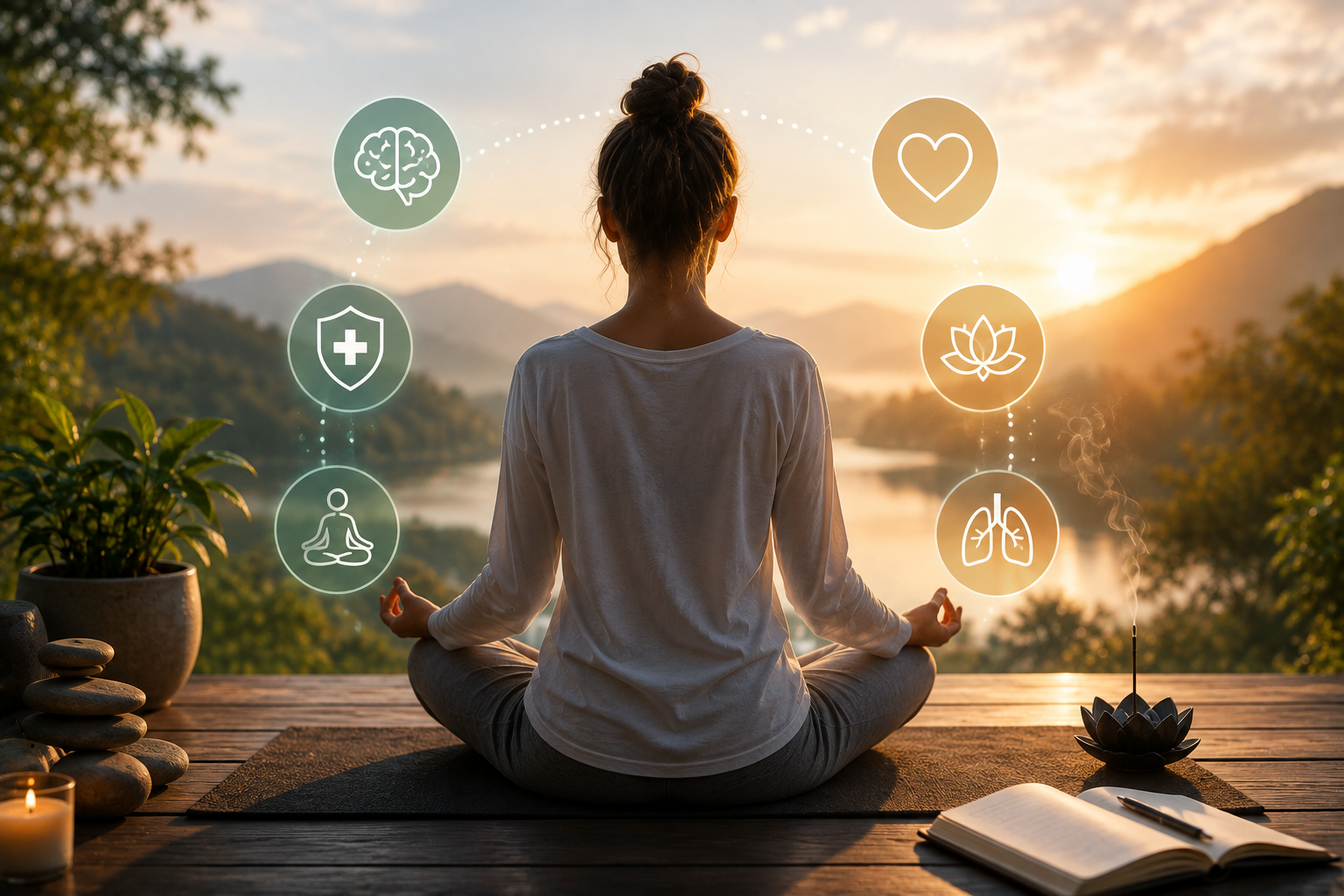
Unlocking the Power of Meditation: Benefits for Body and Mind
Modern life is often filled with deadlines, constant notifications, work pressure, and personal responsibilities. As a result, many people struggle with stress, anxiety, poor sleep, and difficulty concentrating. Fortunately, one simple habit can help improve both mental and physical well-being—meditation.
The meditation benefits extend far beyond simply feeling relaxed for a few minutes. Regular meditation can improve focus, support emotional balance, promote better sleep, reduce stress, and even contribute to better physical health. Best of all, meditation requires no expensive equipment, gym membership, or special location. It can be practiced almost anywhere and adapted to suit different lifestyles.
Whether you are completely new to meditation or looking to strengthen your daily practice, this guide explores the science-backed meditation benefits, explains different meditation techniques, and provides practical tips to help you build a routine that fits your life.
What Is Meditation?
Meditation is a practice that trains your mind to focus, remain present, and become more aware of your thoughts without reacting to them immediately. Rather than trying to stop thinking completely, meditation teaches you to observe your thoughts calmly and gently return your attention to a chosen point of focus, such as your breathing.
People have practiced meditation for thousands of years in different cultures and traditions. Today, it is widely used to improve mental wellness, increase productivity, reduce stress, and support overall health.
Why More People Are Meditating in 2026
The growing popularity of meditation isn’t surprising. As people become more aware of the connection between mental and physical health, meditation has become an important part of many wellness routines.
Some common reasons people begin meditating include:
- Managing daily stress
- Improving concentration
- Sleeping better
- Supporting emotional health
- Reducing anxiety
- Creating healthier daily habits
- Increasing mindfulness
Unlike many wellness trends, meditation is accessible to nearly everyone regardless of age or fitness level.
Top Meditation Benefits for Your Mind and Body
The following table summarizes some of the most important meditation benefits you may experience with regular practice.
| Meditation Benefit | How It Helps |
|---|---|
| Reduces stress | Helps calm the nervous system and promotes relaxation |
| Improves focus | Increases concentration and mental clarity |
| Better sleep | Encourages relaxation before bedtime |
| Emotional balance | Helps manage negative emotions more effectively |
| Supports heart health | May contribute to healthier blood pressure levels |
| Reduces muscle tension | Encourages physical relaxation |
| Enhances self-awareness | Promotes mindfulness and emotional understanding |
| Improves overall well-being | Supports both mental and physical wellness |
Meditation Benefits for Mental Health
Mental well-being is one of the primary reasons people choose to meditate regularly.
While meditation is not a replacement for professional medical care, it can become a valuable addition to a healthy lifestyle.
Helps Reduce Stress
Stress affects nearly every aspect of daily life.
When we experience stress, our bodies release hormones that prepare us to respond to challenges. While this response is helpful in emergencies, ongoing stress can negatively affect both physical and mental health.
Meditation encourages the body to enter a more relaxed state by slowing breathing and helping calm racing thoughts.
People who meditate regularly often report:
- Feeling calmer during difficult situations
- Responding more thoughtfully instead of reacting emotionally
- Recovering from stressful events more quickly
Supports Better Emotional Health
Meditation encourages greater awareness of thoughts and emotions.
Instead of becoming overwhelmed by negative feelings, practitioners gradually learn to observe emotions without immediately acting on them.
Over time, this may contribute to:
- Greater patience
- Improved emotional resilience
- Better mood
- Increased optimism
- Stronger self-confidence
Improves Focus and Concentration
Many people struggle with distractions caused by smartphones, social media, emails, and busy schedules.
Meditation trains the brain to return attention to a single point of focus.
With regular practice, many people notice improvements in:
- Reading comprehension
- Productivity
- Memory
- Decision-making
- Attention span
Students and professionals often include meditation in their daily routines to improve concentration throughout the day.
Meditation Benefits for Physical Health
Although meditation is commonly associated with mental wellness, it may also support several aspects of physical health.
Encourages Better Sleep
Difficulty sleeping often begins with an overactive mind.
Meditation before bedtime helps many people relax by slowing mental activity and preparing the body for rest.
Benefits may include:
- Falling asleep faster
- Better sleep quality
- Fewer nighttime awakenings
- Feeling more refreshed in the morning
May Support Heart Health
Chronic stress places additional pressure on the cardiovascular system.
By encouraging relaxation, meditation may help support healthy blood pressure and improve overall heart health when combined with healthy lifestyle habits.
Helps Manage Chronic Pain
Pain is influenced not only by physical conditions but also by emotional and psychological factors.
Mindfulness meditation may help some individuals cope with discomfort by changing how pain is perceived.
Many healthcare professionals now include mindfulness practices alongside traditional treatment plans for chronic pain management.
Supports a Healthy Immune System
A healthy lifestyle includes:
- Nutritious food
- Regular exercise
- Adequate sleep
- Stress management
Meditation complements these habits by helping reduce long-term stress, which may support healthy immune system function.
Different Types of Meditation
There is no single “correct” way to meditate.
Different techniques work better for different personalities and lifestyles.
Mindfulness Meditation
Mindfulness meditation focuses on observing thoughts, emotions, and physical sensations without judgment.
It is one of the most widely practiced forms of meditation today.
Guided Meditation
Guided meditation uses audio recordings or instructors who lead you through breathing exercises, visualization, or relaxation techniques.
This option is excellent for beginners.
Breathing Meditation
Breathing meditation simply involves paying close attention to your breathing.
Whenever your mind wanders, gently return your attention to each breath.
Loving-Kindness Meditation
This technique encourages feelings of kindness and compassion toward yourself and others.
It may help strengthen empathy and improve relationships.
Body Scan Meditation
Body scan meditation involves slowly focusing attention on different areas of the body.
Many people use this practice before bedtime to release physical tension.
How to Start Meditating
Beginning a meditation practice is much easier than many people expect.
You don’t need special clothing, expensive equipment, or years of experience.
Step 1: Find a Quiet Place
Choose a location where you are unlikely to be interrupted for several minutes.
Step 2: Sit Comfortably
Sit on a chair, cushion, or the floor.
Maintain a relaxed but upright posture.
Step 3: Focus on Your Breathing
Pay attention to each inhale and exhale.
When thoughts appear, simply acknowledge them and gently return your attention to your breathing.
Step 4: Start Small
Many beginners find success by practicing for:
- 5 minutes
- 10 minutes
- 15 minutes
As meditation becomes part of your routine, you can gradually increase the duration.
Step 5: Stay Consistent
Consistency is more important than session length.
Practicing for 10 minutes every day often provides better results than meditating for an hour only once a week.
Tips for Building a Daily Meditation Habit
Developing a routine helps meditation become a natural part of your day.
Helpful strategies include:
- Meditate at the same time daily.
- Turn off phone notifications.
- Use a meditation timer.
- Start with guided sessions.
- Keep expectations realistic.
- Be patient with yourself.
- Track your progress in a journal.
Small daily improvements often produce meaningful long-term results.
Common Meditation Mistakes to Avoid
Many beginners believe they are “doing meditation wrong.”
In reality, distractions are completely normal.
Avoid these common mistakes:
- Expecting instant results
- Trying to stop every thought
- Sitting in uncomfortable positions
- Skipping practice after missing one day
- Comparing yourself to experienced meditators
- Meditating only during stressful periods
Meditation is a skill that improves gradually through consistent practice.
How Long Does It Take to Experience Meditation Benefits?
Everyone’s experience is different.
Some people notice reduced stress after only a few sessions.
Other meditation benefits develop gradually over several weeks or months of regular practice.
The key is consistency rather than perfection.
Simple Daily Meditation Routine
The following routine works well for beginners.
| Time | Activity |
|---|---|
| 1 minute | Sit comfortably and relax your body |
| 2 minutes | Focus on slow, natural breathing |
| 3 minutes | Observe thoughts without judgment |
| 2 minutes | Return attention to your breathing |
| 2 minutes | Finish with gratitude or positive reflection |
Even a short daily routine can become a powerful habit over time.
Frequently Asked Questions
What are the biggest meditation benefits?
Some of the most common meditation benefits include reduced stress, improved focus, better sleep, greater emotional balance, increased mindfulness, and support for overall physical well-being.
How long should beginners meditate?
Beginners can start with just five to ten minutes per day. As meditation becomes more comfortable, session length can gradually increase based on personal preference.
Can meditation replace medical treatment?
No. Meditation should not replace professional medical advice or treatment. Instead, it works best as a complementary practice that supports overall health and wellness.
Is it normal for my mind to wander during meditation?
Yes. Mind wandering is completely natural. The goal of meditation is not to eliminate thoughts but to gently bring your attention back to your chosen focus whenever distractions arise.
What is the best time to meditate?
Many people prefer meditating in the morning to begin the day calmly, while others enjoy practicing before bedtime to relax and improve sleep. The best time is simply the one that fits consistently into your schedule.
Final Thoughts
The many meditation benefits make this simple practice one of the most accessible ways to improve both mental and physical well-being. From reducing stress and improving focus to encouraging better sleep and supporting emotional balance, meditation offers lasting benefits that can positively influence every aspect of daily life.
The most important step is simply getting started. You don’t need long sessions or perfect technique to experience meaningful results. By practicing consistently, remaining patient, and making meditation part of your daily routine, you can gradually develop a healthier mind, a calmer outlook, and a greater sense of overall well-being.