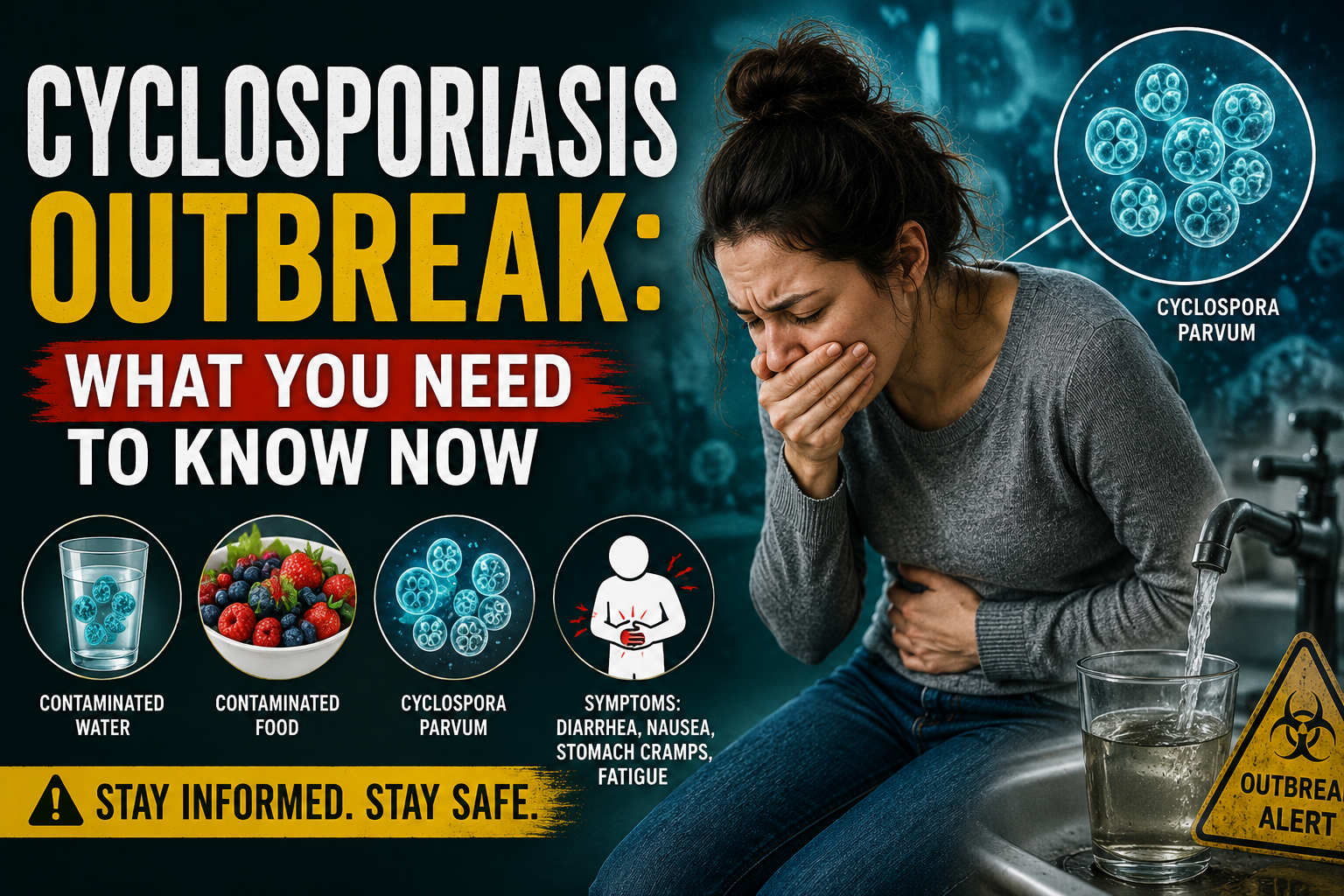
Cyclosporiasis Outbreak: What You Need to Know Now
Cyclosporiasis Outbreak: What You Need to Know Now
The cyclosporiasis outbreak under investigation by the CDC and FDA has raised concern after clusters of cases appeared across multiple states, with a particularly large spike in Michigan. This article explains what cyclosporiasis is, who is affected, how it spreads, and practical steps to reduce your risk.
What is cyclosporiasis and why this outbreak matters
Cyclosporiasis is an intestinal infection caused by the microscopic parasite Cyclospora. The illness commonly produces watery, sometimes explosive diarrhea, and can last weeks if untreated. Health officials note a seasonal increase in cases during spring and summer; the current cyclosporiasis outbreak has prompted heightened surveillance and multi-agency investigations.
Where cases have been reported
As of official reports, at least 31 states have reported cases. Michigan has reported a particularly large cluster: the state identified roughly 300 cases early in July and later reported 3,309 cases as of July 14. Cases reported to date range in age from 5 to 88 years, with an average age of 44; about 59% of reported patients are female. Most people became ill after eating food in the U.S. without recent travel.
Authorities continue case interviews and traceback efforts to find a common source. The FDA and CDC are collaborating with state health departments to identify contaminated products, and recent investigations have pointed to leafy greens and lettuce as possible sources.
How the cyclosporiasis outbreak spreads
The parasite that causes cyclosporiasis spreads when food or water becomes contaminated with feces containing Cyclospora. Unlike some infections, the parasite typically requires one to two weeks outside the body to become infectious after being shed in stool, making direct person-to-person spread less likely. Contamination can occur at any point from farm to table, though exact mechanisms are not always clear.
Recognizing symptoms and seeking care
Common symptoms of cyclosporiasis include:
- Watery, often severe diarrhea
- Abdominal cramping and bloating
- Nausea and loss of appetite
- Headache and malaise
Untreated illness can persist for weeks in an on-and-off pattern. The greatest risk is dehydration, especially for young children, older adults, people with chronic illnesses, and the immunocompromised. Treatment typically involves a specific antibiotic regimen prescribed by a clinician.
Prevention: practical steps to reduce risk
Because contaminated produce has been implicated in past outbreaks, the best protection is careful food handling and informed choices:
- Wash hands with soap and water before and after handling fresh produce.
- Rinse all fruits and vegetables under running water before cutting or eating.
- Use a clean produce brush for firm items like melons and cucumbers.
- Cut away any damaged or bruised areas before preparing produce.
- Refrigerate cut, peeled, or cooked fruits and vegetables within two hours.
Note: Washing does not guarantee removal of all parasites, but it reduces risk. Because the cyclosporiasis outbreak is under investigation, follow guidance from local health departments about specific products to avoid.
When to contact a health professional
If you experience persistent diarrhea, severe abdominal pain, or signs of dehydration (dizziness, decreased urination, dry mouth), seek medical attention. Tell your clinician about recent food exposures. Public health labs may test stool samples to confirm cyclosporiasis.
What investigators are doing now
State and federal agencies are conducting interviews with ill people, performing traceback investigations, and testing samples to identify a shared food source. The Michigan Department of Health and Human Services has coordinated multi-jurisdictional efforts and shared information with the CDC and the Michigan Department of Agriculture & Rural Development.
For the latest official guidance and updates, consult the CDC’s cyclosporiasis information page and FDA food safety resources:
- CDC: Cyclosporiasis — basics, symptoms, and prevention.
- FDA: Food Safety — investigations and product advisories.
- Michigan Department of Health and Human Services — state updates on the outbreak.
Local public health departments also post alerts and product advisories; check for guidance from your state or county health agency.
Summary and practical takeaways
The current cyclosporiasis outbreak highlights the ongoing risk posed by contaminated fresh produce. While investigators work to identify specific sources, consumers can reduce risk by following strict produce-handling practices and staying informed through official channels.
Key actions:
- Practice careful handwashing and produce rinsing.
- Refrigerate prepared produce promptly.
- Seek medical care for prolonged or severe symptoms.
- Follow updates from public health authorities and avoid products under investigation.
For local resources on this outbreak, see our local outbreak resources and review our guide to safe produce handling. Stay informed and cautious—especially when consuming leafy greens during this investigation.