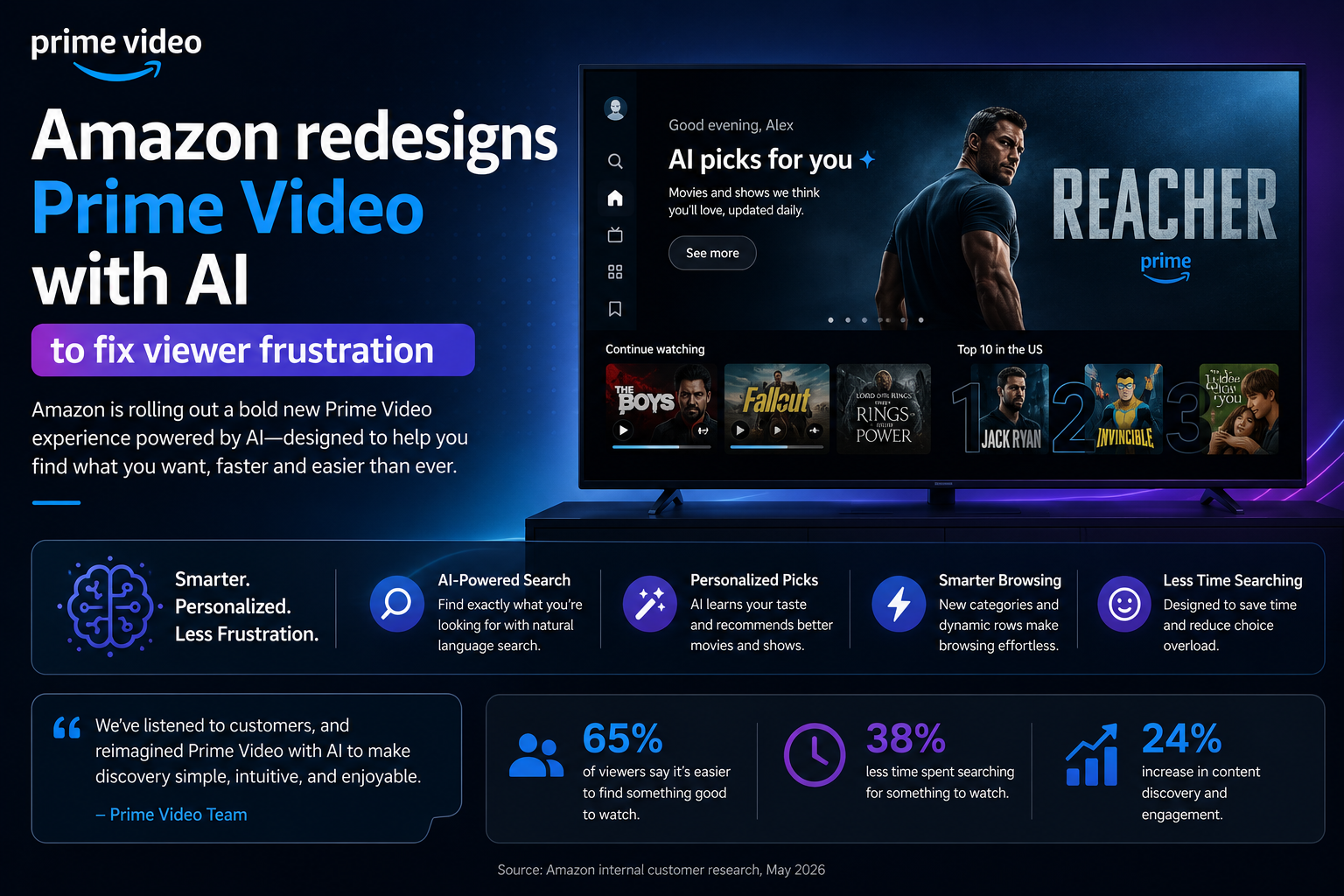
Amazon redesigns Prime Video with AI to fix viewer frustration
Prime Video AI redesign
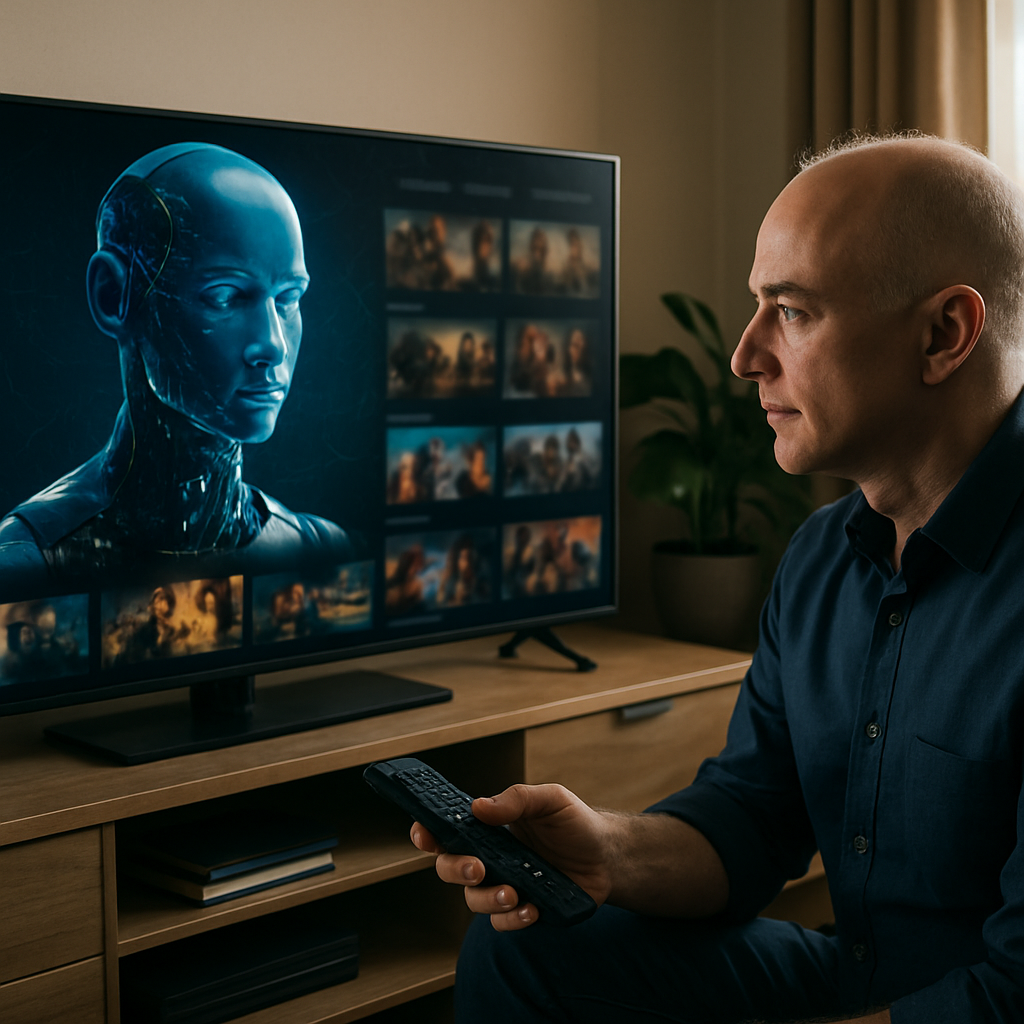
Prime Video‘s home screen has looked the same for years — a grid of rows and tiles that often doesn’t reflect what you actually want to watch. Jeff Bezos is reportedly steering a major overhaul to change that, moving AI to the center of the experience as part of an internal effort called the Lighthouse project.
The planned Amazon streaming redesign would replace the familiar fixed grid with a homepage focused on AI-driven recommendations. Instead of static categories, some prototypes build tiles around natural prompts like “action movies from the 1980s” or “Christmas rom-coms,” personalized to each viewer’s tastes. That approach aims to reduce scrolling fatigue by serving suggestions shaped by your viewing history rather than one-size-fits-all rows.
Search, voice, and highlights
Amazon is also exploring tighter integration of Alexa voice search, so you could simply tell the app what you’re in the mood for instead of typing. Traditional search would remain available, while the top of the screen would still reserve space for prominent content such as Thursday Night Football, Amazon’s exclusive NFL game.
Those changes are intended to make Prime Video recommendations feel more useful and immediate, leveraging video streaming AI to surface relevant options faster.
Why Bezos pushed for change
The Lighthouse project wasn’t a routine refresh. Reuters reports it grew from a tense meeting last fall where Bezos told Prime Video executives their existing plan didn’t lean hard enough into personalization and AI. The team abandoned that version and rebuilt under global design lead Kam Keshmiri, with Bezos remaining actively involved despite his reduced day-to-day role at Amazon.
This redesign comes as Amazon pours massive capital into AI across the company. The firm has committed nearly $200 billion in capital spending this year tied largely to AI, on top of prior investments — including an initial $23 billion split between OpenAI and Anthropic. Lighthouse is one visible effort to boost Amazon’s AI profile while competitors keep advancing their own personalization strategies.
Business context and uncertainty
Prime Video currently captures roughly 4.2% of US television viewing, trailing platforms like YouTube, Netflix, and Disney+. That market position creates incentive to experiment with streaming personalization to improve engagement.
But the move raises questions. Prime Video already allows studios to pay for prime placement on the home screen. If personalized rankings reduce that paid real estate, viewers could see results prioritized by their interests rather than advertiser spend — a potential win for users. Yet it’s also possible paid placement becomes embedded in the algorithm, preserving commercial influence even as the interface looks more personalized.
Amazon’s wider AI efforts, including an Alexa overhaul, have yielded mixed results and the unit has reportedly been unprofitable. Whether Lighthouse will meaningfully improve the user experience — or simply repackage the same scrolling fatigue — remains to be seen.
- Amazon tests early versions of the redesign with a small group of users.
- Feedback from those tests could reshape the final Prime Video home screen.
- Only broad rollout will show if AI-driven recommendations truly ease discovery on the platform.