ChatGPT Adds Teen Safety Controls and Study Tools
OpenAI says widening access to AI should come with protections, and ChatGPT teen safety is at the center of its latest update. The company argues that denying teens access would leave them unprepared for a technology many already use regularly — nearly 90% of teens turn to ChatGPT weekly for learning, research, or organization.
ChatGPT teen safety
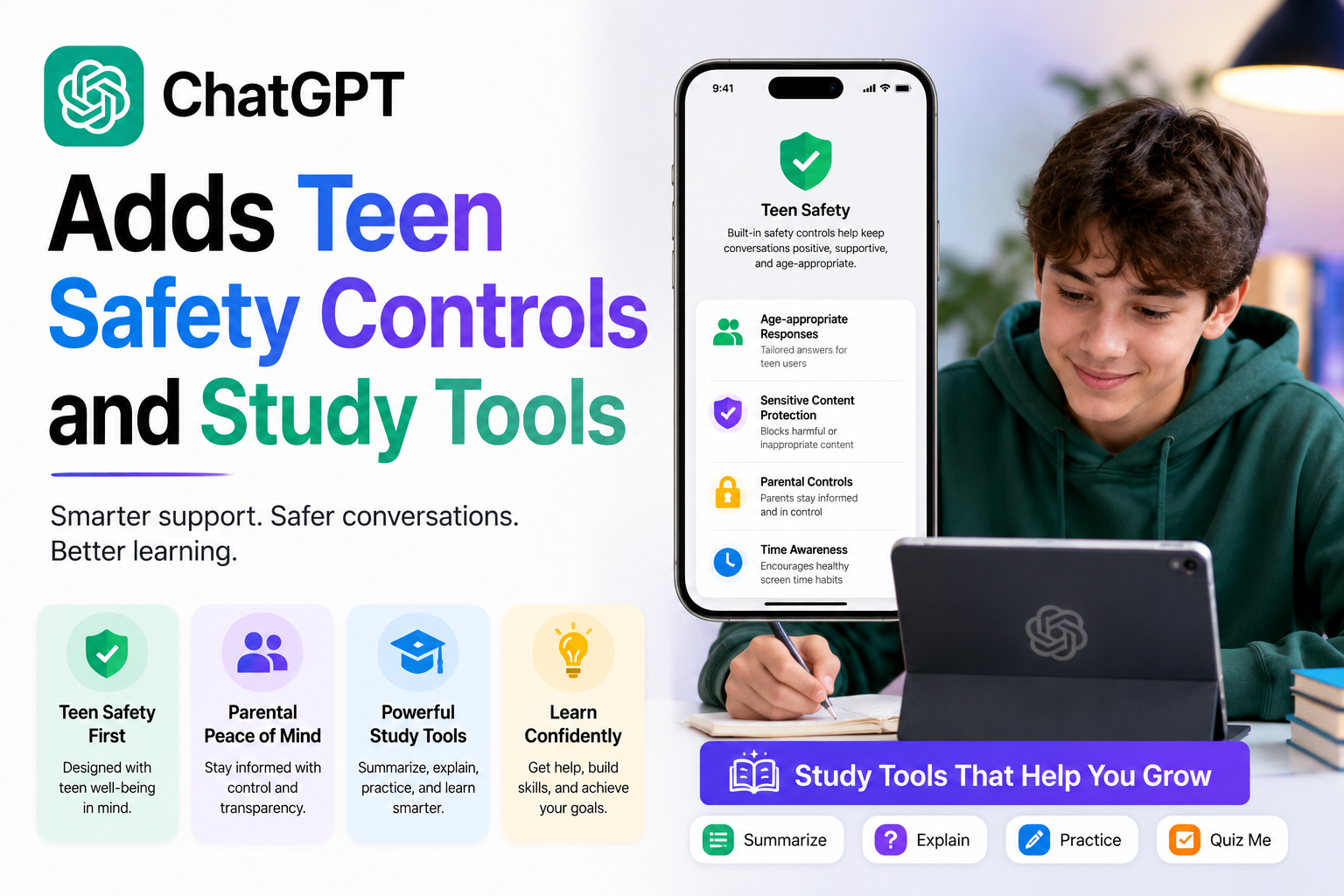
To create a more age-appropriate AI experience, ChatGPT now uses age prediction to automatically switch to a safer mode when it estimates a user is under 18. If the system is unsure, it defaults to the more cautious teen experience. That means tougher filters around graphic violence, self-harm, unhealthy body image, and risky viral challenges.
Tools for teens and families
OpenAI Teens will also encounter more frequent break reminders during extended sessions to encourage healthier screen habits. Parents get expanded parental controls ChatGPT options, including:
- Setting Quiet Hours to limit access at certain times.
- Disabling Voice Mode to restrict audio interactions.
- Managing image-generation access.
- Receiving notifications in high-risk situations, such as potential self-harm indicators.
These settings aim to balance teen online safety with reasonable access so young people can learn and create without unnecessary exposure to harm.
Learning-first features
A major part of the rollout focuses on education. Study Mode, developed with teachers and learning experts, guides students step by step through problems rather than just supplying answers. Parents can enable Study Mode by default through parental controls, helping keep homework and learning on track.
OpenAI has also added starter prompts for schoolwork and expanded interactive learning tools like math and science helpers. Those tools already reach 18 million weekly users across more than 250 topics, reinforcing the company’s commitment to AI safety for teens while supporting creativity and academic growth.