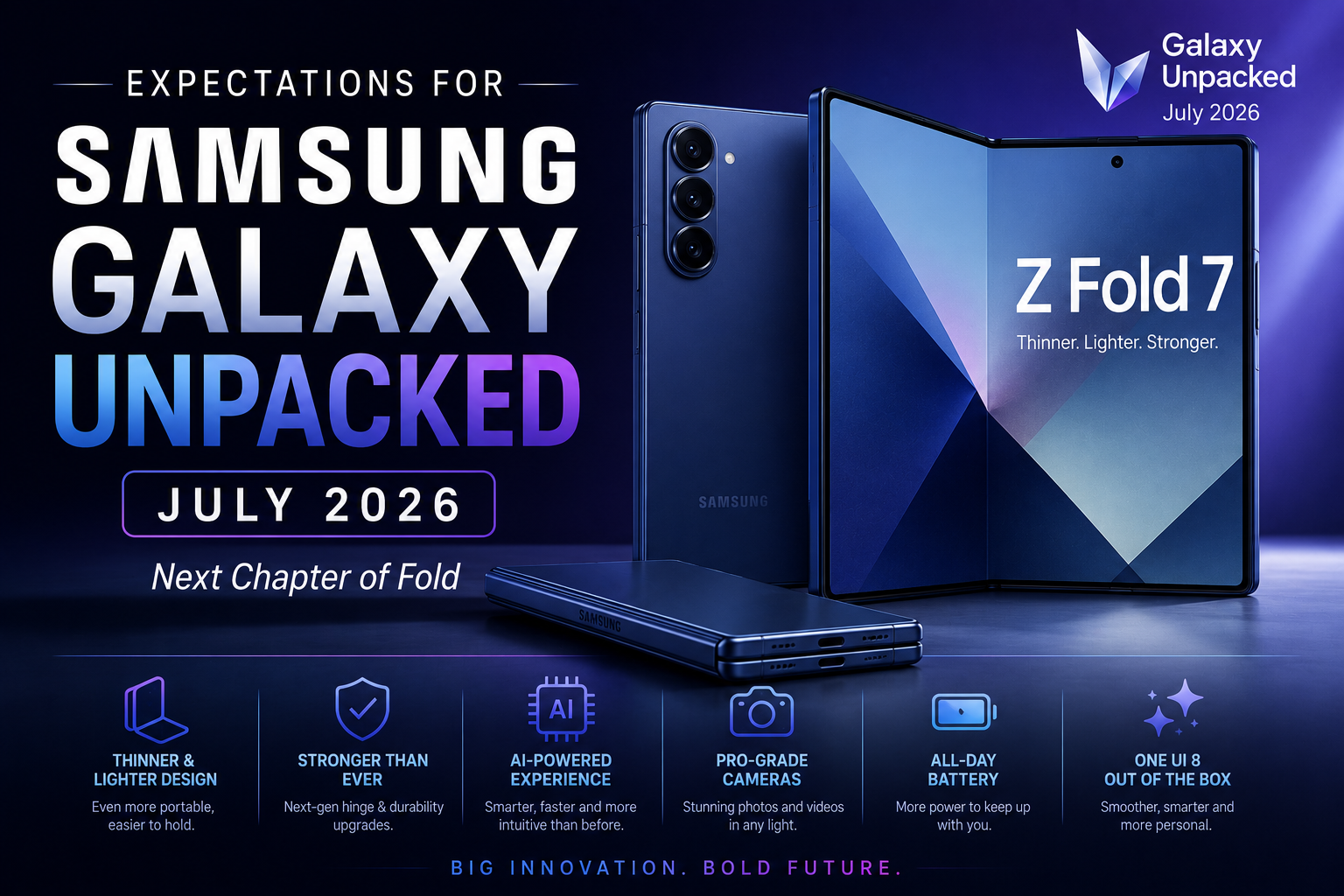
Expectations for Samsung Galaxy Unpacked July 2026
At Samsung Galaxy Unpacked July 2026, I wouldn’t be surprised if Samsung offered at least a tease for a second smart ring, building on the original and responding to competitors like Oura and Vital Signals. The smart ring Galaxy could be positioned as a slimmer, more polished wearable that leans hard on health tracking and tight integration with Samsung’s ecosystem, but for now all we have are questions rather than confirmations.
Two years after the first Galaxy Ring, the market has sharpened. Oura’s newer rings and Vital Signals’ Signal Ring have pushed the category toward sleeker designs and longer battery life, and Samsung will need to show meaningful improvements to stay relevant. That doesn’t necessarily mean radically new sensors; it could be better battery optimization, a thinner profile, or deeper software integrations that surface unique value through Galaxy AI features and Samsung Health.
What a new Galaxy ring might aim to do
- Provide better battery life and a slimmer fit than the first-generation Galaxy Ring, making everyday wear less obtrusive.
- Bring tighter integration with Galaxy AI features — think contextual health insights, predictive sleep coaching, and smarter notifications routed across your Galaxy devices.
- Sync more seamlessly with Galaxy Watch Ultra 2 and Galaxy Watch 9, allowing complementary sensor workloads to conserve energy while improving accuracy.
- Offer clearer privacy controls and data transparency to avoid the backlash smart eyewear has faced.
None of those are certainties, and Samsung leaks so far haven’t given us a reliable spec sheet for a second ring. But a teaser at Unpacked would make sense: Samsung likes to hint at future hardware to show off broader ambitions beyond phones and watches.
Smart glasses remain a serious wildcard
Samsung’s work with Google, Gentle Monster, and Warby Parker — revealed at Google I/O in May — indicates the company is seriously exploring intelligent eyewear. The leaked bits we do know suggest both models will have built-in cameras for photos and video, plus speakers for music, calls, and notifications. That makes them directly comparable to Meta’s smart glasses, and it raises the same privacy questions that have dogged other wearable cameras.
Key concerns will be policing use, ensuring reasonable privacy defaults, and communicating clearly about recording indicators. Samsung will also have to justify the devices beyond novelty: will the glasses deliver genuinely useful hands-free experiences powered by Galaxy AI features, or will they be niche accessories for early adopters?
Samsung Galaxy Unpacked July 2026: what to watch for
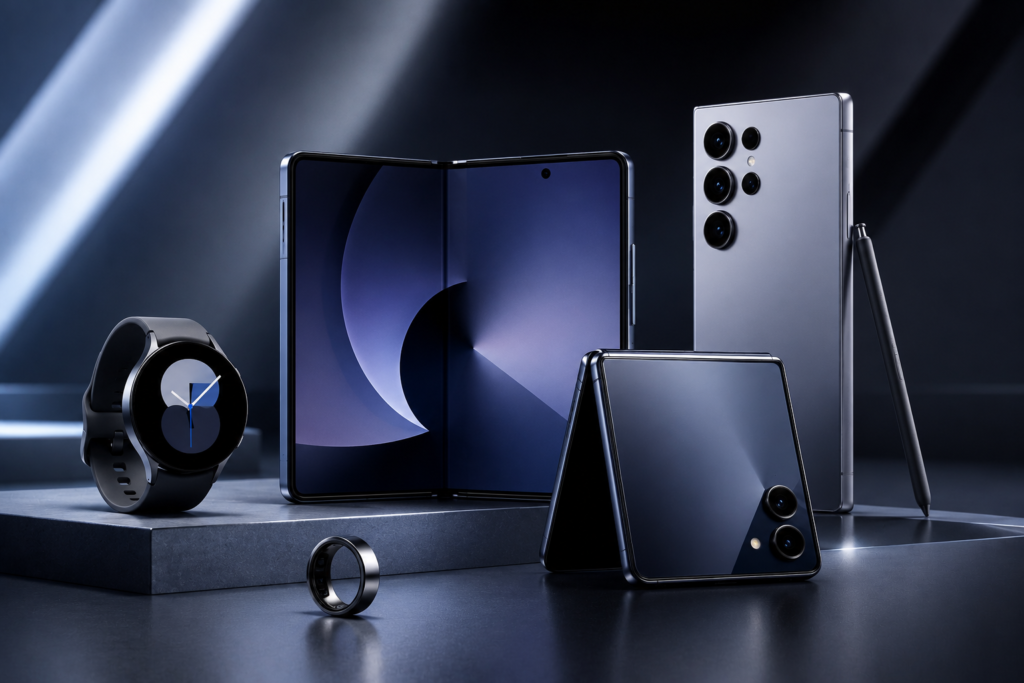
The Unpacked event on July 22 will likely confirm what the months of Samsung leaks have suggested. Expect Samsung to aim for a narrative that ties hardware upgrades to Flex Titanium and software that leans into Galaxy AI features. Here are the main storylines to watch:
- Foldables and Flex Titanium: Samsung has positioned Flex Titanium as the material upgrade that improves durability and reduces crease visibility. While we’ve already seen leaks about the Z Flip 8 specs and the Z Fold 8 Ultra variants, the official presentation should frame Flex Titanium as the key hardware advance for foldable phones 2026.
- Watches that last longer: The Galaxy Watch Ultra 2 and Galaxy Watch 9 are expected to be thinner while offering battery improvements. Look for Samsung to stress extended real-world usage times and new fitness or health features tied into Galaxy AI.
- Galaxy AI features front and center: Samsung will likely showcase generative and predictive AI across its devices — from foldables to watches to possibly rings and glasses. Watch for demos of automation, smarter camera-assisted edits, and contextual suggestions that aim to justify the device upgrades.
- Wearables ecosystem: Samsung’s strength is its device ecosystem. Expect the company to show how foldables, watches, rings, and glasses can work together — for example, using a watch for continuous biometric sampling while a ring handles overnight metrics, all surfaced through Samsung Health and Galaxy AI.
- Teasers and timelines: Even if we don’t get full releases for smart glasses or a Galaxy Ring 2, Samsung may drop release windows, developer tools, or partner announcements that hint at where these products are headed.
How Samsung could avoid the pitfalls
To make the most of this mid-year Unpacked, Samsung needs to do three things well: explain why each new product meaningfully improves the user experience, avoid overstating the role of AI, and be clear about privacy and data handling. If foldables are stronger and less crease-prone thanks to Flex Titanium, that’s a tangible hardware win. If watches genuinely last longer in daily use, that’s a real improvement for users who’ve felt burned by short battery life. And if Galaxy AI features feel helpful rather than gimmicky, that will go a long way to differentiating Samsung from rivals.
Privacy will be particularly central for smart glasses and any camera-equipped wearables. Clear visual indicators, easy-to-find privacy settings, and an open explanation of what data is stored or shared will be necessary to win broader acceptance.
Ultimately, this Unpacked will be less about one headline device and more about how Samsung brings its ecosystem together. New foldables, wearables, AI features, and potentially smart glasses all need to feel like parts of a connected experience rather than standalone upgrades. If Samsung can deliver meaningful hardware improvements, practical software features, and transparent privacy practices, this could be one of its most compelling product launches in recent years. If not, even an ambitious lineup may struggle to stand out in an increasingly competitive market where consumers are looking for genuine value rather than incremental innovation.
Samsung’s announcements will also arrive as Google prepares updates for the Pixel Watch lineup, highlighting the growing competition in the wearable market.