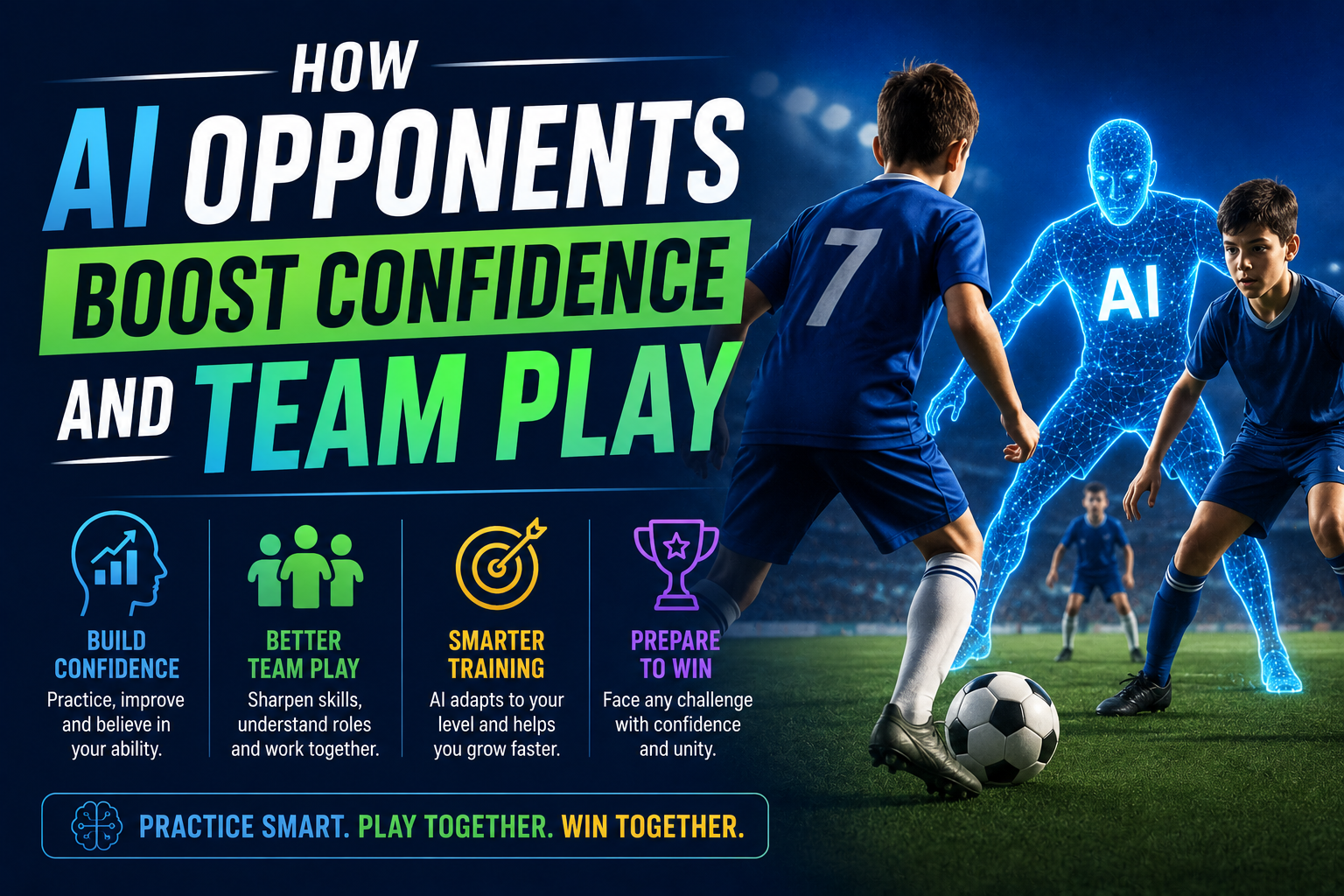
How AI Opponents Boost Confidence and Team Play
AI opponents
The study suggests that AI opponents can do more than fill empty slots—they can quietly rebuild player confidence and encourage more social play. By blending bots into competitive lobbies and tuning their difficulty just below average human players, developers created a low-stakes space where newcomers could survive, learn, and feel competent.
That boost in player confidence translated into measurable changes in behavior. Researchers observed longer play sessions and a higher match count per player, indicators of stronger game retention. But the most striking shift was social: players who experienced early successes were more likely to join squads, coordinate with teammates, and embrace team-based objectives rather than hiding out or leaving matches early.
How subtle AI design changes behavior
Two design choices made a big difference. First, PUBG bots were intentionally calibrated to be beatable but realistic, providing practice without humiliation. Second, the system kept the identity of opponents ambiguous—players couldn’t tell for certain who was human and who was AI. That uncertainty made each win feel authentic and reinforced self-efficacy gaming, the belief that one can succeed through skill and effort.
These tactics speak directly to multiplayer matchmaking challenges. In highly skewed skill ecosystems, matching new players against veterans can drive churn. Introducing adaptive AI or hybrid lobbies reduces that barrier, letting players build competence before facing the steepest competition. The result is not just happier newcomers but a healthier ecosystem where social play flourishes.
Practical lessons for game makers and beyond
Designers and product teams can learn from Krafton AI’s measured approach without copying it verbatim. Well-implemented bots and training partners can act as scaffolding: they help users practice, increase their sense of control, and ease them into richer, collaborative experiences.
- Prioritize perceived fairness: Make AI opponents convincing and appropriately challenging so wins feel earned.
- Preserve uncertainty when valuable: Not revealing which opponents are AI can maintain the emotional payoff of success.
- Use AI for onboarding: Training with AI can shorten learning curves and reduce early churn.
- Balance matchmaking: Mix human and AI opponents to avoid demotivating mismatches while still offering real competition.
- Measure social outcomes: Track team play increase, match re-entry, and retention, not just win rates.
Beyond games, these findings have relevance for any environment where social participation hinges on confidence—workplaces, classrooms, or collaborative tools. Rather than replacing human interaction, AI can serve as a stepping stone that helps people learn, practice, and then engage more fully with others.
In short, thoughtful AI integration can bolster player confidence and drive more cooperative play. When AI is used as a learning scaffold—whether in PUBG or other platforms—it can increase engagement, improve multiplayer matchmaking outcomes, and ultimately help people feel more capable and connected in shared experiences.