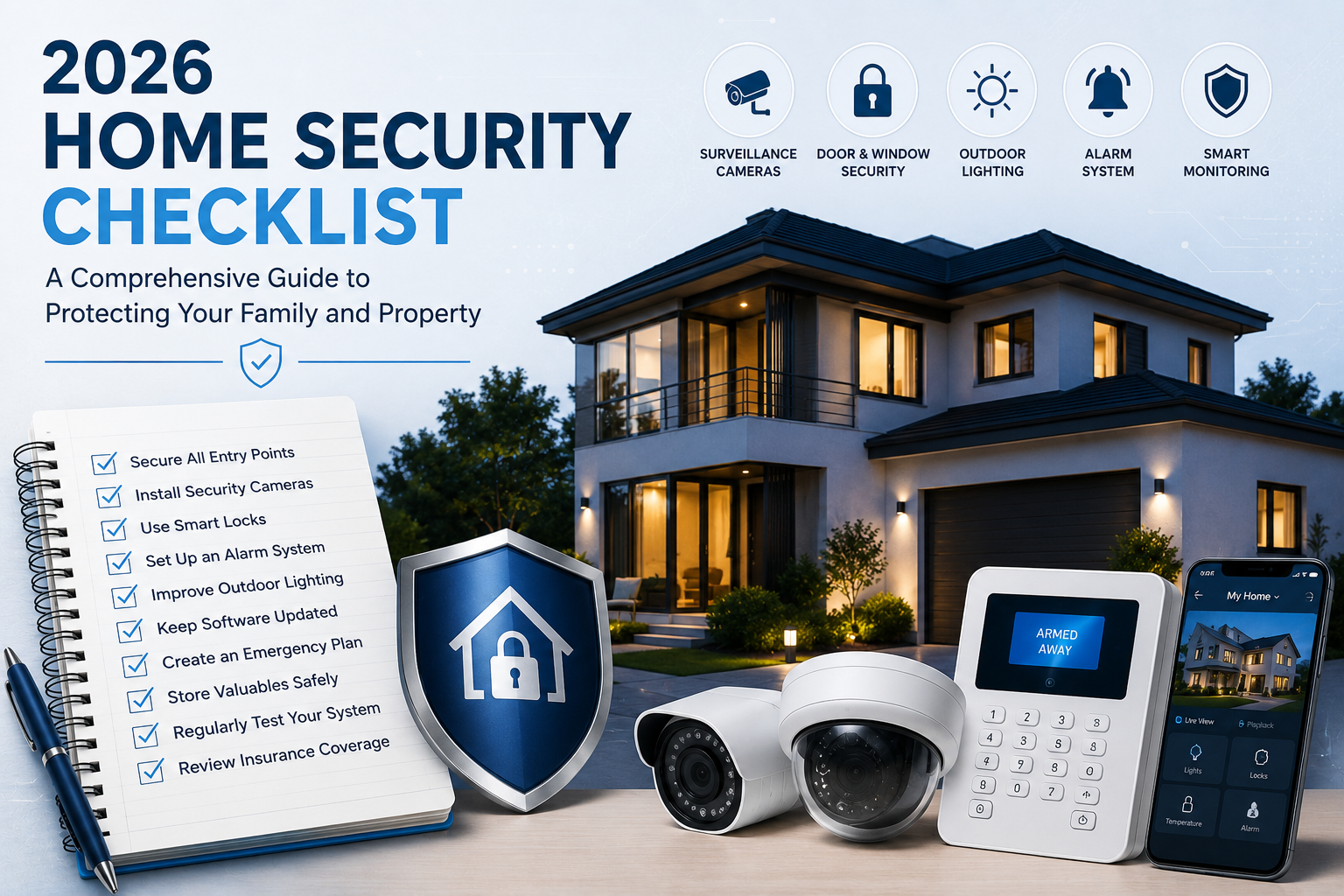
2026 Home Security Checklist: A Comprehensive Guide to Protecting Your Family and Property
Keeping your home safe has always been a priority, but in 2026, home security has become more important than ever. As technology continues to evolve, so do the methods used by criminals. Fortunately, homeowners now have access to smarter security solutions that make protecting their families and property easier and more effective.
A well-planned home security checklist 2026 goes beyond simply locking your doors. It involves securing entry points, improving outdoor visibility, installing reliable security systems, protecting digital devices, and developing safety habits that reduce risks before they become problems.
Whether you own a house, townhouse, apartment, or vacation property, this comprehensive guide will help you evaluate your home’s current security and identify practical improvements. By following this checklist, you can significantly reduce the chances of burglary, theft, vandalism, and other security threats while creating a safer environment for everyone in your household.
Why Home Security Matters More in 2026
Modern homes contain valuable electronics, smart devices, financial information, and personal belongings that can attract criminals. At the same time, many families work remotely or travel frequently, making reliable home security even more essential.
A strong home security strategy offers several benefits:
- Protects your family from intruders
- Safeguards valuable possessions
- Deters criminal activity
- Provides peace of mind
- May reduce home insurance premiums
- Allows remote monitoring while traveling
Rather than relying on a single security measure, homeowners should combine multiple layers of protection for the best results.
Your Complete Home Security Checklist 2026
The following checklist covers every major area of residential security. Completing each section will greatly improve your home’s overall protection.
| Security Area | Priority | Recommended Action |
|---|---|---|
| Outdoor Security | High | Install cameras, lighting, and maintain landscaping |
| Doors & Locks | High | Upgrade doors, deadbolts, and smart locks |
| Window Security | High | Add locks, sensors, and security film |
| Home Security System | High | Install monitored alarms and sensors |
| Smart Home Security | Medium | Secure connected devices and Wi-Fi |
| Garage Security | Medium | Protect garage doors and entry points |
| Fire & Emergency Safety | High | Install smoke and carbon monoxide detectors |
| Family Safety Plan | High | Create emergency procedures for all household members |
Outdoor Security
Your home’s exterior is the first line of defense against unwanted visitors. A well-maintained property discourages criminals by reducing opportunities to approach unnoticed.
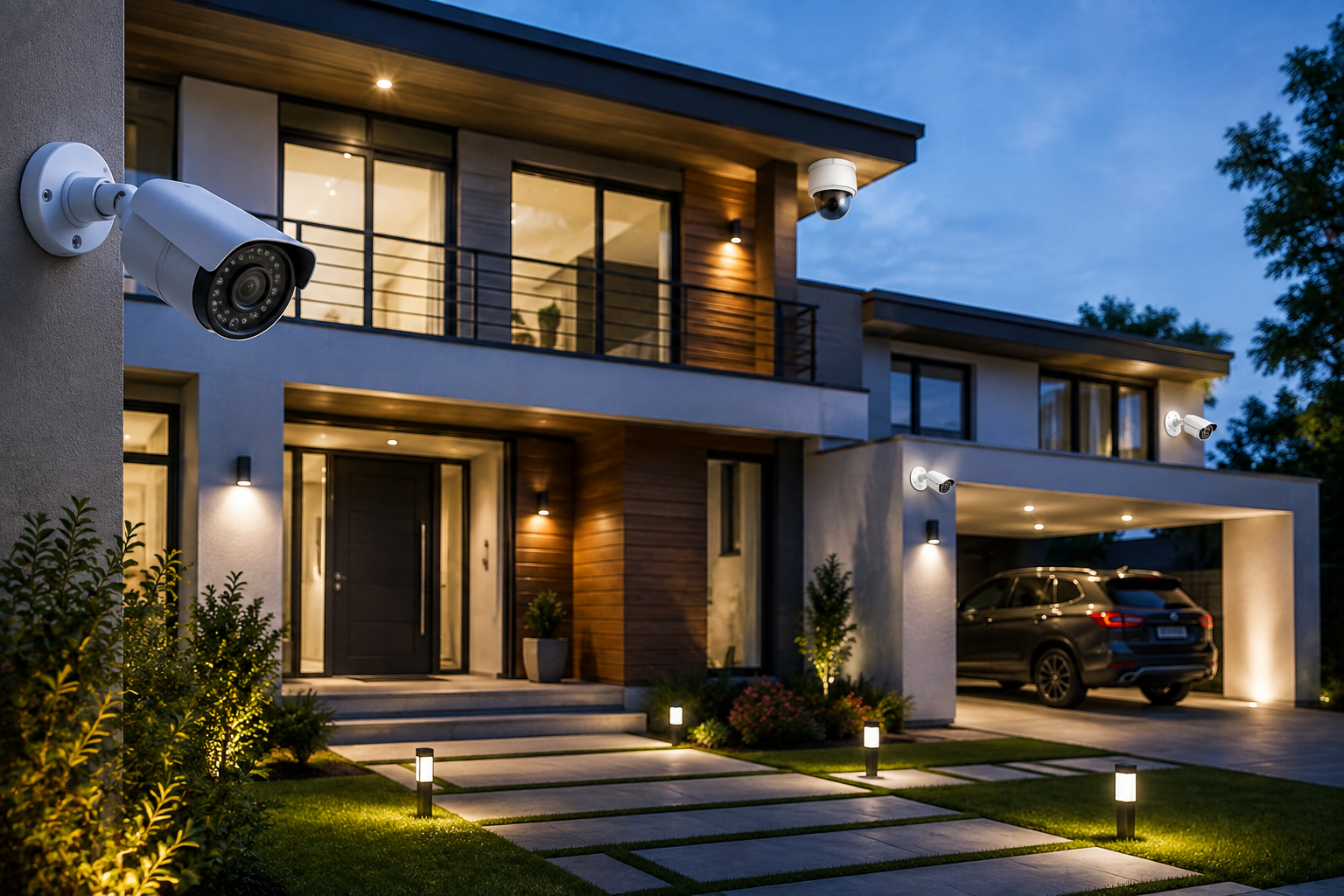
Install Security Cameras
Modern security cameras provide excellent protection and can record suspicious activity day and night.
Choose cameras with features such as:
- High-definition video
- Night vision
- Motion detection
- Two-way audio
- Cloud or local storage
- Smartphone notifications
Place cameras near:
- Front entrance
- Back door
- Garage
- Driveway
- Side entrances
- Backyard
Use Motion-Activated Lighting
Dark areas create hiding places for intruders.
Install motion-sensitive lighting around:
- Front porch
- Backyard
- Walkways
- Garage
- Side gates
Motion lighting not only improves security but also makes it easier for family members to move around safely at night.
Maintain Landscaping
Overgrown vegetation can provide cover for burglars.
Regularly:
- Trim bushes below window level
- Prune tree branches near roofs
- Remove dense shrubs around entrances
- Keep pathways visible
A clean, open yard improves both security and curb appeal.
Door and Lock Security
Most burglars attempt entry through doors. Strengthening these access points should be one of your highest priorities.
Install Solid-Core or Metal Doors
Lightweight hollow doors are easier to force open.
Instead, choose:
- Solid wood doors
- Steel security doors
- Reinforced fiberglass doors
These materials offer significantly better resistance against forced entry.
Upgrade Deadbolt Locks
Quality deadbolt locks remain one of the simplest and most effective security upgrades.
Look for:
- Minimum one-inch bolt
- Reinforced strike plate
- Heavy-duty screws
- Certified security ratings
Proper installation is just as important as selecting a quality lock.
Consider Smart Locks
Smart locks add convenience while improving security.
Benefits include:
- Keyless entry
- Temporary guest access
- Remote locking
- Activity logs
- Smartphone control
Many smart locks also integrate with broader smart home ecosystems.
Inspect Doors Regularly
Even the strongest lock cannot compensate for a damaged door.
Check periodically for:
- Loose hinges
- Warped frames
- Damaged locks
- Worn weather stripping
- Misaligned strike plates
Routine maintenance keeps doors functioning properly.
Window Security
Windows are common entry points that homeowners sometimes overlook.
Securing every accessible window significantly reduces vulnerability.
Install Window Locks
Every window should have a functioning lock.
Replace broken or outdated locks immediately.
For sliding windows, consider additional security bars or secondary locking devices.
Add Window Security Film
Security film strengthens glass and helps prevent easy breakage.
Benefits include:
- Increased impact resistance
- Delayed forced entry
- Reduced shattered glass
- Added UV protection
Although security film does not make windows unbreakable, it provides valuable extra time during attempted break-ins.
Install Window Sensors
Modern alarm systems include sensors that immediately detect window openings.
These sensors:
- Trigger alarms
- Send smartphone notifications
- Improve monitoring
They work especially well when combined with security cameras.
Keep Windows Locked
Even during pleasant weather, avoid leaving ground-floor windows open when leaving the house.
This simple habit eliminates an easy opportunity for intruders.
Home Security Systems
A professionally designed security system creates multiple layers of protection.
Today’s systems are smarter, easier to install, and more affordable than ever.
Essential Components
A complete security system should include:
- Door sensors
- Window sensors
- Motion detectors
- Indoor siren
- Outdoor siren
- Security cameras
- Mobile app
Some systems also include professional monitoring services that contact emergency responders when alarms activate.
Motion Detectors
Motion detectors monitor interior movement.
Install them in:
- Hallways
- Living rooms
- Main entrances
- Staircases
Proper placement minimizes false alarms while maximizing coverage.
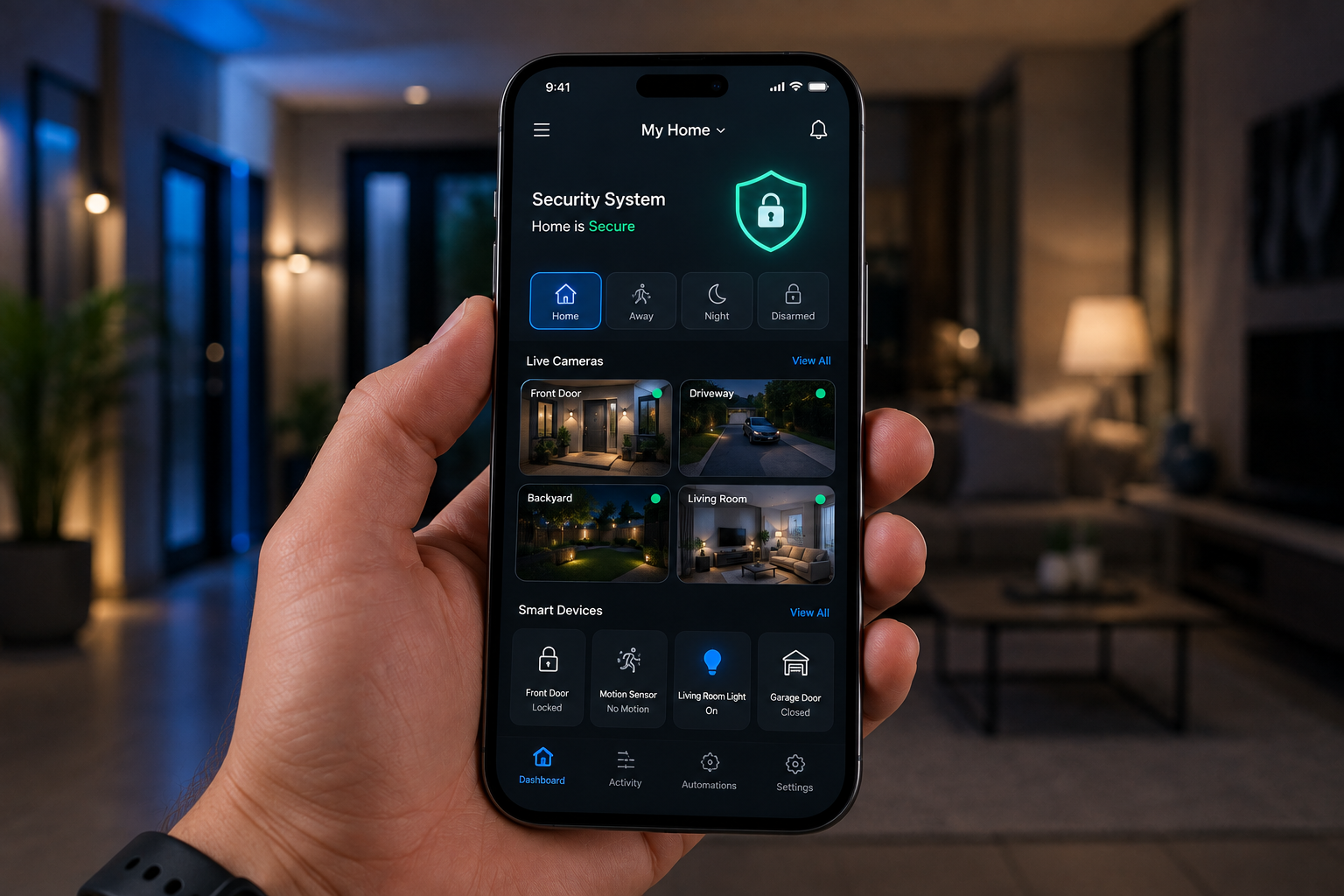
Smart Security Systems
Many homeowners now prefer smart security systems because they offer remote management.
Features may include:
- Live video viewing
- Remote arm/disarm
- Real-time notifications
- Voice assistant integration
- Automated routines
These systems provide greater flexibility than traditional alarm systems.
Garage Security
Garages often contain expensive tools, bicycles, and vehicles.
Unfortunately, they are frequently overlooked during security planning.
Protect your garage by:
- Locking interior access doors
- Securing emergency release cords
- Installing garage door sensors
- Using smart garage controllers
- Keeping garage windows covered
Never leave garage door remotes visible inside parked vehicles.
Smart Home Device Security
As more homes adopt connected technology, cybersecurity becomes part of physical security.
Protect smart devices by:
- Creating strong passwords
- Enabling two-factor authentication
- Updating firmware regularly
- Using encrypted Wi-Fi
- Removing unused devices
Hackers increasingly target poorly secured smart devices.
Wi-Fi Network Security
Your home network connects cameras, alarms, smart locks, and other devices.
Secure it by:
- Changing default router passwords
- Using WPA3 encryption if available
- Creating separate guest networks
- Disabling unnecessary remote access
- Installing router updates
A secure network helps protect every connected device.
Fire and Emergency Safety
Home security is not limited to preventing theft.
Families should also prepare for fires, gas leaks, and emergencies.
Smoke Detectors
Install smoke alarms:
- Inside bedrooms
- Outside sleeping areas
- Every floor
- Basement
- Kitchen area (appropriate distance)
Test alarms monthly.
Replace batteries according to manufacturer recommendations.
Carbon Monoxide Detectors
Carbon monoxide cannot be seen or smelled.
Install detectors near:
- Bedrooms
- Gas appliances
- Attached garages
Regular testing is essential.
Fire Extinguishers
Keep extinguishers in:
- Kitchen
- Garage
- Workshop
- Laundry room
Ensure everyone knows how to use them safely.
Protect Valuable Items
Store important documents and valuables securely.
Consider:
- Fireproof safe
- Waterproof document box
- Safety deposit box
- Hidden storage locations
Protect items such as:
- Passports
- Birth certificates
- Property documents
- Jewelry
- Cash
- Backup drives
Create a Family Emergency Plan
Every family member should know what to do during an emergency.
Discuss:
- Emergency exits
- Safe meeting locations
- Emergency phone numbers
- Fire evacuation routes
- Security alarm procedures
Practice these plans regularly so everyone remains prepared.
Home Security Habits That Make a Difference
Technology is helpful, but daily habits remain equally important.
Develop routines such as:
- Locking doors immediately after entering
- Checking windows before leaving
- Activating alarms every night
- Collecting deliveries promptly
- Avoiding public vacation announcements on social media
- Verifying visitors before opening the door
Small habits often prevent major security incidents.
Common Home Security Mistakes
Many homeowners unintentionally create security risks.
Avoid these common mistakes:
- Hiding spare keys outside
- Leaving doors unlocked
- Ignoring broken locks
- Forgetting garage security
- Neglecting software updates
- Poor outdoor lighting
- Weak Wi-Fi passwords
- Disabling security notifications
Correcting these issues significantly strengthens your home’s defenses.
Monthly Home Security Inspection Checklist
Use this checklist every month to ensure your home remains protected.
| Task | Completed |
|---|---|
| Test security cameras | ☐ |
| Check door locks | ☐ |
| Inspect window locks | ☐ |
| Test smoke detectors | ☐ |
| Test carbon monoxide detectors | ☐ |
| Update smart device firmware | ☐ |
| Trim landscaping | ☐ |
| Review alarm notifications | ☐ |
| Test motion sensors | ☐ |
| Verify emergency contacts | ☐ |
Home Security Checklist 2026 Summary
| Category | Recommended Priority |
|---|---|
| Cameras | ⭐⭐⭐⭐⭐ |
| Smart Locks | ⭐⭐⭐⭐⭐ |
| Deadbolts | ⭐⭐⭐⭐⭐ |
| Motion Lighting | ⭐⭐⭐⭐⭐ |
| Window Locks | ⭐⭐⭐⭐ |
| Smart Alarm System | ⭐⭐⭐⭐⭐ |
| Garage Security | ⭐⭐⭐⭐ |
| Wi-Fi Security | ⭐⭐⭐⭐ |
| Emergency Planning | ⭐⭐⭐⭐⭐ |
You may also want to explore our guide to the Best Smart Home Devices for 2026.
Frequently Asked Questions
What is the most important item in a home security checklist 2026?
Strong doors, quality deadbolt locks, reliable outdoor lighting, security cameras, and a monitored alarm system form the foundation of an effective home security plan. Combining these measures provides significantly better protection than relying on any single solution.
Are smart home security systems worth it?
Yes. Smart security systems allow homeowners to monitor their property remotely, receive instant alerts, control locks and alarms from a smartphone, and integrate multiple security devices into one convenient platform.
How often should I test my home security system?
You should test cameras, alarms, sensors, smoke detectors, and carbon monoxide detectors at least once a month. Regular inspections help ensure every component works correctly during an emergency.
Can outdoor lighting reduce burglary risk?
Yes. Motion-activated lighting removes hiding places around your property and increases visibility, making it more difficult for intruders to approach unnoticed.
Do renters need home security?
Absolutely. Renters can improve security by using smart locks (where permitted), portable alarm systems, door and window sensors, indoor security cameras, and good daily safety habits without making permanent modifications to the property.
Final Thoughts
Following a thorough home security checklist 2026 is one of the best ways to protect your family, home, and valuable possessions. Effective home security combines physical barriers, smart technology, regular maintenance, and responsible daily habits to create multiple layers of protection.
You don’t need to complete every upgrade at once. Start by addressing high-priority areas such as doors, locks, outdoor lighting, and security cameras. Then gradually enhance your home’s security with smart systems, window protection, network security, and emergency preparedness.
By reviewing this checklist regularly and making security part of your routine, you can enjoy greater peace of mind knowing your home is better prepared to handle today’s security challenges and those that may arise in the future.