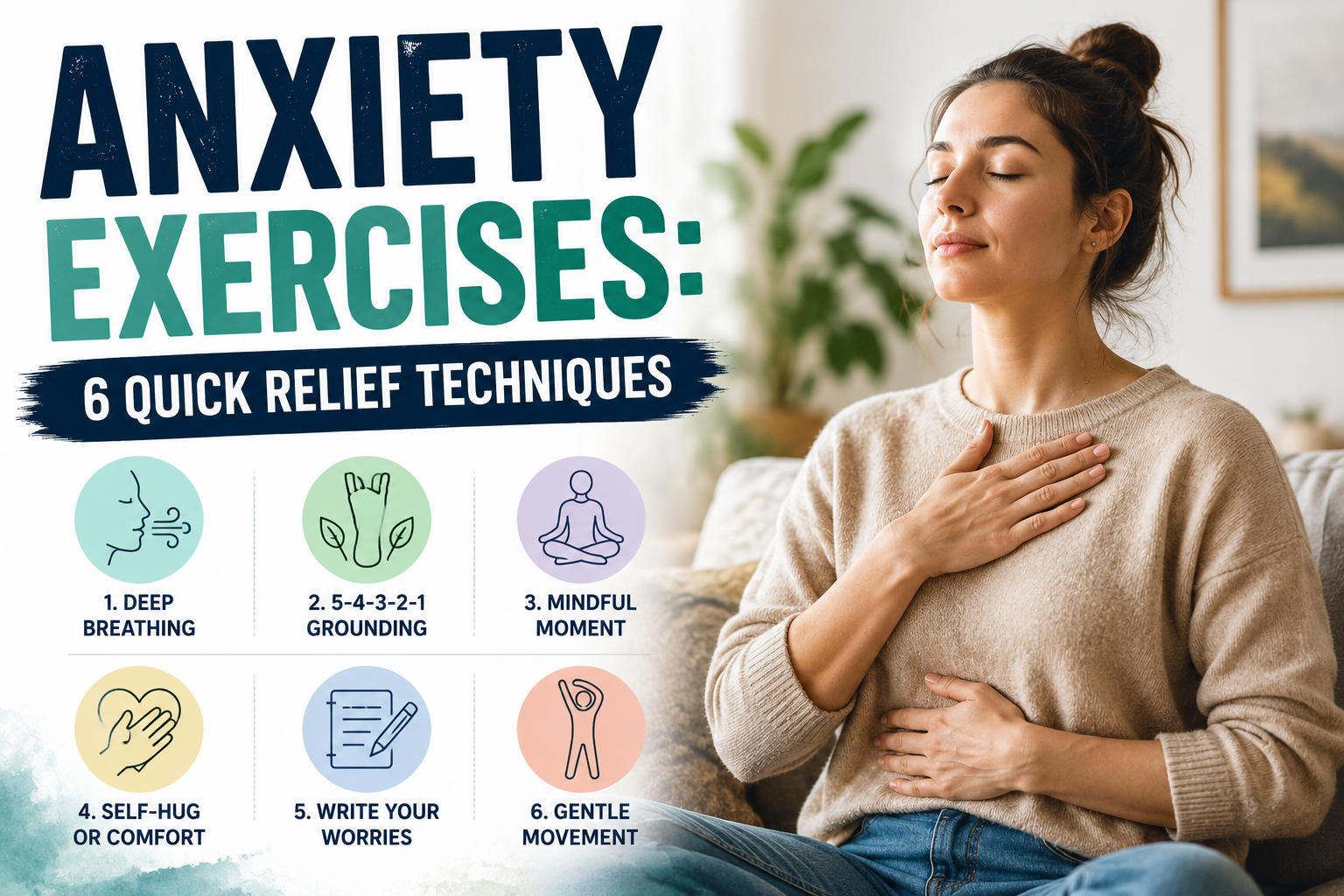
Anxiety Exercises: 6 Quick Relief Techniques
These anxiety exercises can help reduce symptoms when worry or panic feels overwhelming. Use one or more of the techniques below anytime you need quick anxiety relief or to practice longer-term anxiety coping strategies.
anxiety exercises
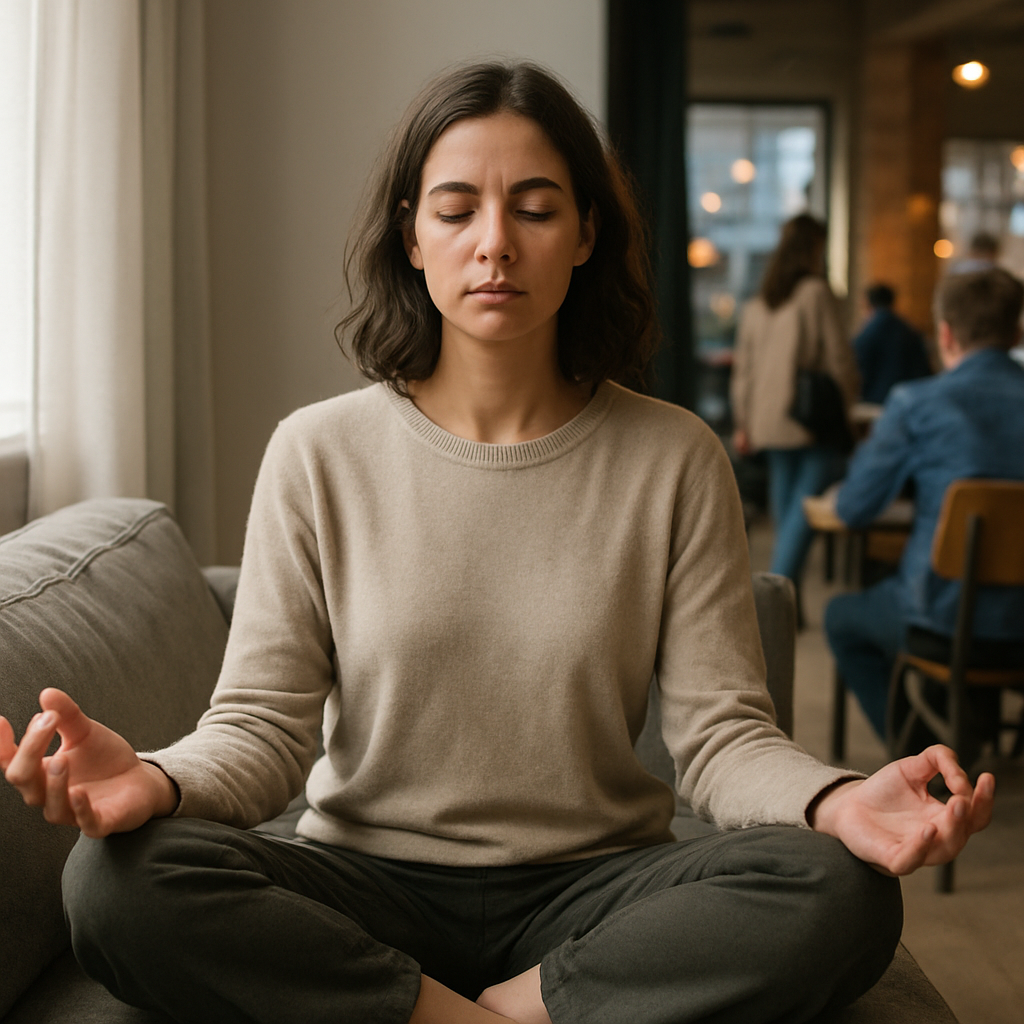
Anxiety is a natural response to stress, but when it becomes frequent or intense it can interfere with daily life. The following exercises are practical ways to calm your body and steady your thinking. Try them in a quiet place at first, then practice in busier settings so the skills are ready when you need them.
Breathe
Physical signs of anxiety often include lightheadedness, a racing heart, or short, shallow breathing. Slowing your breath can reduce these sensations and bring you back into the present.
- Sit comfortably and place one hand on your chest and the other on your belly.
- Inhale slowly through your nose for a count of four. The hand on your belly should rise more than the one on your chest.
- Exhale gently through your mouth for a count of four or six.
- Continue this diaphragmatic breathing until you feel calmer.
Practice this for five minutes a day even when you’re not anxious so it becomes automatic. For more options, look into other breathing exercises for anxiety such as box breathing or 4-7-8 breathing.
Visualize
Visualization meditation can be a powerful tool for people who think in images. Create a simple, calming scene—real or imagined—and return to it when anxiety rises.
- Close your eyes and take slow breaths.
- Picture a place that feels safe: a beach, a quiet room, or a familiar childhood spot. Focus on sensory details—colors, sounds, textures, and temperature.
- If intrusive thoughts appear, gently guide your attention back to the scene and your breathing.
Not everyone finds visualization easy. If you struggle to form images, try pairing the image with a soothing phrase or a short piece of music to anchor the practice.
Relax your muscles
Tension in the body often accompanies anxiety. Progressive muscle relaxation—tensing then releasing muscle groups—can reduce physical tightness and promote calm. A 2024 review found that progressive muscle relaxation may help reduce anxiety.
- Sit or lie down in a comfortable place and close your eyes.
- Take a slow breath in. Tense one muscle group (for example, clench your fists) for five to ten seconds.
- Exhale and release the tension, noticing the feeling of relaxation as the muscles soften.
- Move through the body: hands, forearms, shoulders, neck, face, chest, abdomen, legs, and feet.
Doing a full cycle takes about 10–20 minutes, but you can also tense and release a single area for quick relief when anxious.
Count
A simple counting technique for anxiety can break the loop of racing thoughts by giving your mind a neutral task. Counting is especially useful when you’re in a crowded or busy place and other exercises are harder to perform.
- Sit or stand comfortably and close your eyes if it feels safe to do so.
- Slowly count to 10, then back down to 1. If needed, extend to 20 or higher.
- Keep the focus on the counting rhythm and your breath.
Counting redirects attention and creates a small, manageable goal that can make intense feelings feel less overwhelming.
Practice mindfulness
Mindfulness for anxiety means observing thoughts, sensations, and surroundings without judgment. This gentle shifting of attention from worry to the present moment can reduce reactivity and increase calm.
- Find a quiet spot and sit comfortably. Close your eyes and notice your breath and how your body feels.
- Shift your awareness to sounds, smells, and physical sensations around you. Name them briefly—“car,” “breeze,” “chair.”
- Move your attention between body sensations and the environment several times, then return to your breath.
Short sessions—two to five minutes—can be effective. Like deep breathing, mindfulness is most helpful when you practice regularly, not only during high-anxiety moments.
Interrupt anxious thinking
When worry cycles keep replaying, intentionally interrupting those thoughts can help you regain clarity. Try playful, concrete, or sensory techniques to break the pattern.
- Sing a silly song about your worry or speak the anxious thought in a funny voice to reduce its power.
- Choose a pleasant image or memory—a loved one, a favorite meal, a future plan—and focus on that instead.
- Switch activities: listen to upbeat music, read a page of a book, or perform a quick physical task to redirect your attention.
- Be mindful when you shift attention from worry to a task, and notice how your mood changes.
These strategies can help you interrupt anxious thoughts before they escalate and create space to respond more calmly.
When to reach out for help
These techniques offer quick anxiety relief and practical coping skills, but they aren’t a substitute for professional care when anxiety is frequent or disabling. If anxiety regularly interferes with work, relationships, sleep, or enjoyment of life, speak with your doctor or a mental health professional.
A clinician can assess your symptoms and recommend next steps, which might include therapy, medication, or structured anxiety coping strategies tailored to your needs.
The takeaway
When you need to know how to relax when anxious, simple tools—breathing exercises for anxiety, visualization meditation, progressive muscle relaxation, counting techniques, mindfulness for anxiety, and methods to interrupt anxious thoughts—can help you feel more grounded. Practice these techniques regularly so they become easier to use in stressful moments. If anxiety persists or worsens, reach out to a healthcare professional for further support.