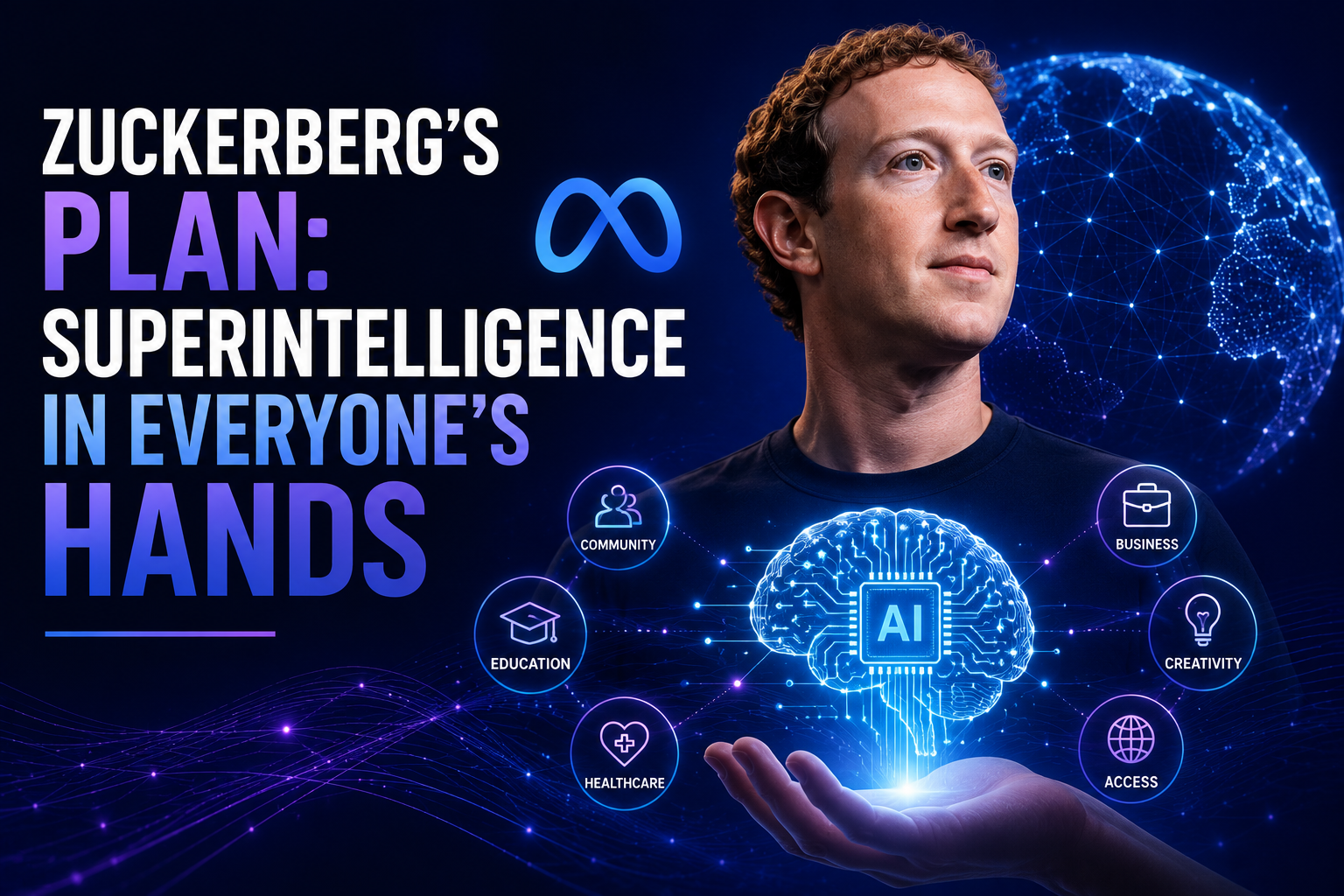
Zuckerberg’s Plan: Superintelligence in Everyone’s Hands
AI superintelligence could arrive on billions of screens not as a standalone product but as a background feature inside apps people already use. The critical question now is whether that deployment will include meaningful user controls or simply extend Meta’s default choices about what the technology can and cannot do.
AI superintelligence

Meta’s ability to push advanced models into existing services gives it unmatched AI distribution power. That footprint—already measured in billions of daily active users—means many people will encounter increasingly capable assistants whether they opted in or not. For advocates of broader AI access, wider distribution promises benefits: personalized health guidance, productivity tools and educational aides that scale more quickly than specialized startups or limited government programs can.
Yet distribution without transparent safeguards risks concentrating governance where the compute and capital already sit. Building and governing frontier models requires enormous AI infrastructure and investment. Meta’s recent infrastructure spending plans underscore how concentrated development remains, and with that concentration comes responsibility over design choices, safety policies and content filters.
Who sets the limits?
Users rarely see the trade-offs behind model behavior. Decisions about training data, moderation rules, and default privacy settings are typically made by engineers and executives—sometimes in consultation with external experts, sometimes not. That gap fuels concerns about whether Meta AI and other large players will align their offerings with public expectations for AI ethics and safety.
Public trust matters for adoption. Surveys show skepticism about the pace and stewardship of AI development, and that wariness could slow AI adoption even when the technology is widely available. Regretting a default feature is easier than reversing it at scale; meaningful AI governance would give people clearer control over what systems can do, how their data is used, and how to opt out or customize limits.
- Stronger AI regulation could force clearer standards for deployment and safeguards.
- Independent audits and transparent reporting would help users understand model behavior.
- Product designs that center opt-in choices can balance broad access with personal control.
Meta can deliver reach and resources that make personal superintelligence plausible. The pressing test is whether that power will expand AI access while also embedding robust AI safeguards, governance and ethical guardrails—or simply make another layer of automated decision-making unavoidable for billions.